

Articles

Best Japanese 151 booster boxes to buy in 2026
Best overall: an authentic, factory-sealed Japanese 151 booster box. Best for opening: an unopened box with clearly disclosed seal condition. Best for a specific card: Japanese 151 singles. This 2026 guide from Delightful TCG ranks buying formats—not imaginary editions of the same set—so you can choose between collecting the box, enjoying the packs, and completing your binder.
- An authentic, factory-sealed Japanese 151 booster box is the default choice for sealed collectors.
- Japanese Pokémon Card 151 contains 20 booster packs per standard box, with 7 cards per pack.
- Unwrapped boxes require clear disclosure; missing shrink wrap alone does not prove a counterfeit.
- Japanese 151 singles are the direct choice when you want a particular card rather than random pulls.
Why this matters
Searching for the best Japanese 151 booster box brings up a distinction that matters more than a ranking: several listings can describe the same expansion in different conditions. Factory-sealed boxes, boxes without shrink wrap, loose packs, and singles serve different goals.
Delightful TCG is a fit for collectors seeking authentic Japanese TCG sealed products and singles. For Japanese 151, the buying decision starts with what you want to keep—not what you hope a random pack will contain.
What makes the best Japanese 151 purchase
- Set identity: Confirm Japanese Pokémon Card 151, set code sv2a, rather than an English product or a different 151-themed collectible.
- Seal condition: Separate intact factory packaging from removed shrink wrap, opened boxes, and loose packs.
- Seller clarity: Look for a precise description of what you receive and photographs that support it.
- Collecting goal: Buy a box for the opening experience or sealed display; buy singles for named cards.
- Condition evidence: Inspect box corners and wrapping for sealed collecting, and card surfaces and edges for singles.
Japanese 151 buying options at a glance
| Rank and option | Best for | Standout feature | Key limitation |
|---|---|---|---|
| 1. Factory-sealed Pokémon 151 box | Keeping a sealed collectible | Preserves the unopened product and its packaging | Contents remain unknown; wrap is not proof of authenticity |
| 2. Unopened box without shrink wrap | Opening with full condition disclosure | Retains the box format without making the wrap your collecting goal | Requires more explanation of handling and provenance |
| 3. Japanese 151 loose booster packs | Trying the set before committing to a box | Lets you experience individual pack openings | Does not establish the history of a complete sealed box |
| 4. Japanese 151 singles | Completing a specific card checklist | You select the actual card and variant | No pack-opening surprise; condition needs individual review |
These are buying formats, not four different Japanese 151 expansions. The product link identifies the set; confirm the listing's stated contents and seal condition before choosing your format.
1. Factory-sealed box: best Japanese 151 option for sealed collecting
An authentic Japanese Pokémon Card 151 booster box with intact factory packaging is the strongest default for collectors who want to preserve the unopened product. You keep both the box and the option to open it later. That is a different goal from buying cards for a binder.
For this 2026 guide, the standard contents follow the official Japanese Pokémon TCG product specification: 20 packs per box and 7 cards per pack. That means 140 cards before considering which individual cards appear; it does not mean 140 unique cards or a completed set.
Factory-sealed box pros
- Keeps the unopened box as the collectible, rather than only its contents.
- Preserves the option to open the packs later.
- Provides the standard box format for an opening session if your goal changes.
- Lets you assess packaging condition before deciding whether to display it.
Factory-sealed box cons
- You cannot inspect the cards inside without opening the product.
- Intact-looking shrink wrap does not independently establish authenticity.
- Opening removes the sealed condition you bought it to preserve.
Best for: Collectors building a sealed Japanese Pokémon collection or keeping a recognizable Kanto-themed box.
Before buying, ask whether photographs show the actual box or a representative example. If packaging condition matters to you, inspect corners, creases, tears, and the wrap rather than treating the word sealed as a condition grade.
Verdict: Buy an authentic factory-sealed box when the unopened product itself is your collecting goal.
2. Unopened box without shrink wrap: best for a disclosed opening purchase
A Japanese 151 box without shrink wrap is not automatically counterfeit. Retailers in Japan have removed wrapping as part of resale-prevention practices, but that general practice does not explain the history of every unwrapped box. Judge the individual listing.
The useful distinction is between a box described as unopened with wrapping removed and a box that has been opened or had its packs handled. Those are not interchangeable descriptions. For a 2026 opening purchase, a clear account of the box's condition matters more than a reassuring label.
Unwrapped box pros
- Keeps the box format for collectors who intend to open the packs.
- Makes intact shrink wrap irrelevant to your intended end result.
- Can be assessed on disclosed handling rather than assumptions about packaging.
Unwrapped box cons
- Lacks the original wrapping sought by factory-sealed collectors.
- Requires additional information about whether the box or packs were opened.
- Photographs alone do not establish its full handling history.
Best for: Pack-opening enthusiasts who understand the disclosed condition and do not intend to preserve a factory-sealed box.
Ask the seller to distinguish removed shrink wrap, an opened lid, and removed packs. Do not accept a broad explanation about Japanese retail practices as evidence for the specific box you are considering.
Verdict: Wait until the seller clearly explains the condition; buy only if that condition matches your opening goal.
3. Loose booster packs: best for trying Japanese 151
Loose Japanese 151 packs give you the pack-opening experience without making a complete box your purchase. They suit collectors who want to see the artwork and enjoy a smaller opening session. They are not equivalent to buying a documented, intact box.
The standard Japanese Pokémon Card 151 pack contains 7 cards. Keep that format separate from other Japanese expansions and English 151 products, whose packaging and contents differ.
Loose booster pack pros
- Lets you try the expansion before choosing a box-focused collection.
- Suits a casual opening rather than a sealed-box display.
- Keeps the experience centered on individual packs and their artwork.
Loose booster pack cons
- Does not preserve a complete sealed box.
- Requires disclosure about pack sourcing and handling.
- Cannot guarantee the particular Pokémon or rarity you want.
Best for: Curious collectors who want a taste of Japanese 151, rather than a complete box or a named card.
Ask whether packs came from opened boxes and how they were handled. Treat claims about guaranteed chase cards or unusually favorable loose-pack outcomes as claims that require evidence—not as reasons to abandon ordinary buying checks.
Verdict: Buy for a casual opening experience; skip if your real objective is a specific card or factory-sealed box.
4. Japanese 151 singles: best for targeted binder completion
Singles are the direct alternative when your wish list names a Pokémon, card number, or foil variant. You choose the card rather than hoping it appears in a booster pack. That makes singles a better match for a defined checklist, although they are not booster boxes.
Japanese 151 includes distinct Poké Ball and Master Ball reverse-holo patterns. A card's Pokémon name alone is therefore not enough to identify the version you want. Compare the card number, rarity, foil pattern, and condition together.
Japanese 151 singles pros
- Lets you choose the specific card and variant.
- Avoids adding random duplicates while filling a defined binder gap.
- Allows individual condition inspection before purchase.
- Supports collections built around a favorite Pokémon rather than every pull.
Japanese 151 singles cons
- Removes the surprise of opening a pack.
- Requires separate condition assessment for each card.
- Similar-looking variants need careful identification.
Best for: Collectors completing a Japanese 151 checklist or seeking a particular illustration or reverse-holo version.
Delightful TCG sells individual Japanese cards alongside sealed products. Choose the format that serves your collection, but verify the exact set and variant for any single you consider.
Verdict: Buy singles for named targets; skip another box if you would only enjoy it after pulling one particular card.
How the options are ranked
The ranking prioritizes set identity, seal condition, seller clarity, collecting goal, and condition evidence. Factory-sealed boxes lead because they preserve the unopened collectible while retaining the option to open it. The remaining options win narrower use cases rather than claiming to be better versions of the same box.
This is a buying-format comparison, not a pull-rate test or a prediction of resale returns. For 2026, choose the format whose ordinary outcome you will enjoy—not the format whose exceptional pull you need.
Check these details before buying Japanese 151
Set identity
Look for Japanese Pokémon Card 151 and the set code sv2a. The expansion centers on the original 151 Pokémon, but the number in its name is not a promise that one box contains every species.
English Pokémon 151 products and Chinese 151-themed collectibles are separate purchases. A familiar number or similar artwork does not make their language, contents, or format interchangeable with a Japanese booster box.
Seal condition
Read the condition description before assessing the photographs. Factory-sealed, no shrink wrap, opened box, and loose packs describe different states; none should silently stand in for another.
Wrapping is one piece of evidence. Combine it with the box printing, stated contents, seller information, and any explanation of handling rather than using a single visual detail as your authenticity test.
Seller clarity
A useful listing answers what the product is, what it contains, and what condition you receive. Ask a direct question when the wording leaves room for different interpretations.
Keep the listing description and your order record. When the parcel arrives, compare the unopened product with what was described before removing packaging or opening packs.
Collecting goal
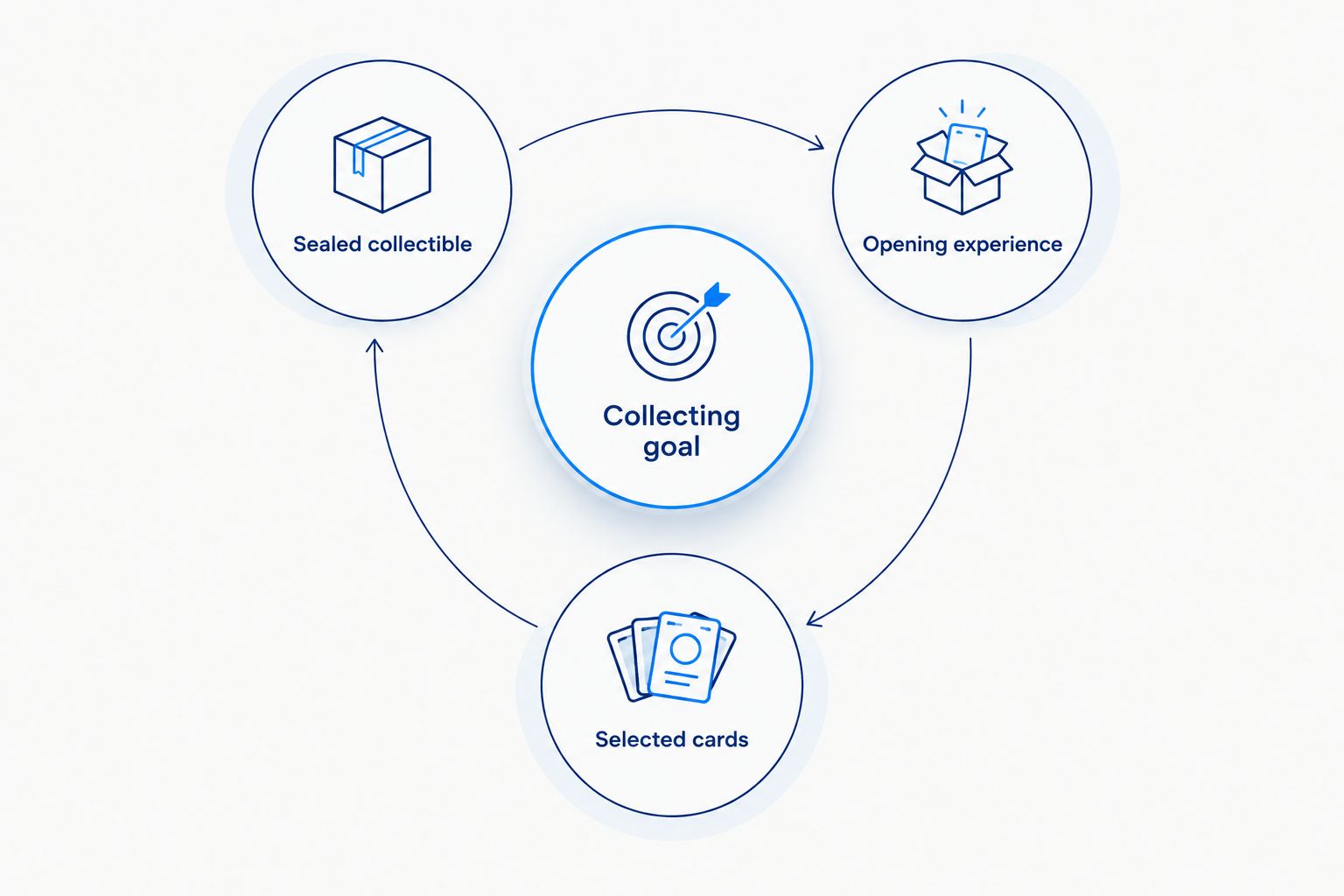
Decide whether you want the sealed object, an opening experience, or selected cards. These goals lead to different purchases even when all three involve Japanese 151.
In 2026, avoid turning a simple nostalgia purchase into an investment decision unless you actually want the responsibilities of keeping and eventually selling sealed products. No box guarantees appreciation or a profitable opening.
What to expect when opening a Japanese 151 box
A standard box supplies 140 cards across 20 packs, but duplicate cards are part of random booster contents. Do not confuse the number of cards you open with the number of checklist spaces you fill. One box is an opening experience, not a complete-set guarantee.
Prepare sleeves, a clean surface, and separate spaces for regular cards and variants. Handle cards by their edges and inspect the reverse-holo pattern before sorting two copies together. That small habit keeps distinct versions from disappearing into your duplicate pile.
Set your stopping point before you open the first pack. If the session leaves you wanting one particular card, move that card to a singles wish list rather than treating another box as the necessary next step.
Which Japanese 151 option should you choose?
Choose an authentic factory-sealed Japanese 151 booster box if you are undecided and want the box itself as part of your collection. It preserves the unopened product, and you can decide later whether to keep it sealed or enjoy the packs.
Choose a disclosed unwrapped box only when opening is the goal and its handling history is clear. Choose loose packs for sampling. Choose singles when your collection needs specific cards rather than more random contents.
For collectors shopping with Delightful TCG in 2026, the same rule applies: match the exact listing to your goal before buying. A different format is not a disappointing substitute when it is the one you actually need.
FAQ
What's the best Japanese 151 booster box to buy in 2026?
An authentic, factory-sealed Japanese Pokémon Card 151 box is the default choice for sealed collectors. If you intend to open it, evaluate the disclosed condition and handling rather than choosing by wrapping alone.
How many packs come in a Japanese 151 booster box?
A standard Japanese Pokémon Card 151 booster box contains 20 packs, with 7 cards per pack. That totals 140 cards, not 140 unique cards or a guaranteed complete set.
Is a Japanese 151 box without shrink wrap fake?
Missing shrink wrap alone does not prove a Japanese 151 box is fake. Ask why the wrapping was removed and whether the box was opened or its packs handled; a general explanation is not proof of an individual box's history.
Are Japanese 151 booster boxes better than loose packs?
Japanese 151 booster boxes are better for collecting the complete unopened product; loose packs are better for sampling the opening experience. Neither format guarantees a particular card, and both require clear condition and sourcing information.
Should I buy Japanese 151 singles instead of a box?
Buy Japanese 151 singles when you want a named card or an exact variant. Buy a box when opening random packs or preserving the sealed product is the experience you want.
Does one Japanese 151 booster box complete the set?
One Japanese 151 booster box does not guarantee a complete set. Random contents include duplicates, and a checklist that includes different rarities and foil variants requires more than counting the cards opened.
Are Poké Ball and Master Ball reverse holos the same?
Poké Ball and Master Ball reverse holos are distinct Japanese 151 variants. Check the actual foil pattern alongside the card number and condition when selecting a single.
Is Japanese 151 the same product as English Pokémon 151?
Japanese Pokémon Card 151 and English Pokémon 151 are separate language releases with different product formats. Confirm the language, set identity, and stated contents rather than assuming that matching expansion names mean matching packaging.
One last thing
Write your collection's finish line before buying: a sealed box, a favorite evolution line, or a clearly defined binder checklist. In Japanese 151, even familiar cards can have different foil variants, so a vague goal to collect everything leaves your next purchase undefined.
Buy for the collection you can describe, not the pull you cannot guarantee. That keeps the nostalgia enjoyable and gives every purchase a purpose.