

Articles

Best Pokémon ex cards ranked by resale price in 2026
The best Pokémon ex card for resale is the exact variant backed by comparable completed sales—not simply the most recognizable Pokémon. For 2026 research, start with Pikachu ex for graded comparisons, Leafeon ex for Japanese Eeveelution collecting, Mew ex for shiny artwork, and Charizard ex for Pokémon 151 nostalgia; treat this order as a research shortlist, not a highest-to-lowest sale ranking.
- Best pokemon ex cards resale price research starts with exact card numbers, language, condition, and completed sales.
- Pikachu ex suits graded-card comparisons; Leafeon ex suits Japanese Eeveelution collectors.
- Mew ex suits shiny-art collectors; Charizard ex suits Pokémon 151 collectors.
- Delightful TCG sells Japanese Pokémon cards; evaluate each resale purchase against matching completed transactions.
Why this matters
A Pokémon name is not a valuation. Pikachu ex exists in different sets and rarities, and a Japanese card is not interchangeable with its English counterpart. Add condition and grading, and you have separate comparisons—not one universal resale figure.
Before buying, use the guide to comparing Pokémon card prices across marketplaces. Your goal is to identify transactions that match the card you will actually receive, rather than collect impressive-looking results for loosely related copies.
Delightful TCG is a fit for collectors shopping for Japanese Pokémon ex cards and other Japanese TCG singles. The shop also sells sealed products, but opening packs and buying a specific resale candidate are different decisions. Choose the single when your objective is one exact card.
What makes the best Pokémon ex resale candidate?
Use these five criteria before comparing cards. They separate a collectible you enjoy from a purchase you can evaluate responsibly.
- Exact identity: Match the Pokémon, set, collector number, language, and rarity. Similar names do not establish comparable value.
- Completed-sale evidence: Look for completed transactions for the same variant. An active listing records a seller's request, not a buyer's decision.
- Condition match: Compare raw cards with similar visible wear, or slabs with the same grading company and grade.
- Selling practicality: Check whether matching transactions recur. One exceptional result does not establish a dependable exit.
- Net proceeds: Account for selling fees, postage, packaging, and any grading expense. Gross proceeds are not profit.
For your 2026 shortlist, keep artwork preference separate from resale evidence. Loving a card is a sound collecting reason. It is not proof that another buyer will pay more later.
Pokémon ex research shortlist at a glance
The order below assigns each card a distinct collecting use case. It does not assert that the first card sells for more than the second. Establish a resale ranking only after comparing the same sale period, language, condition, and grading status.
| Research order | Card or variant | Best for | Standout feature | Key limitation |
|---|---|---|---|---|
| First | Pikachu ex 132, PSA 10 | Graded Japanese-card comparisons | A named variant and grade to match against sales | The full card identity and slab still need verification |
| Second | Japanese Leafeon ex 200/187 | Eeveelution-focused collecting | A specific Japanese collector number | Raw condition must be assessed separately |
| Third | Mew ex 347/190, Shiny Treasure ex | Shiny-art collecting | Japanese special art rare featuring shiny Mew | Other Mew ex versions are not comparable substitutes |
| Fourth | Charizard ex 201/165, Pokémon Card 151 | Original-Pokémon nostalgia | Japanese special art rare from Pokémon Card 151 | English versions and other Charizard ex cards need separate comparisons |
None of these use cases guarantees appreciation. A disciplined purchase depends on the particular copy and its evidence, not its position in this table.
1. Pikachu ex: best for graded Japanese-card comparisons
Pikachu ex is the first research candidate if you want to compare an already graded card with matching graded transactions. The catalog identifies a Pikachu ex 132, PSA 10 listing. Confirm the complete collector number, set, language, and certification before treating any sale as a match.
A PSA 10 comparison is narrower than a general Pikachu search. That helps you exclude raw copies and different grades, but it does not remove the need to inspect the slab and card photographs.
Pikachu ex pros:
- The listed grade gives you a clear comparison category.
- The collector number helps narrow searches beyond the Pokémon name.
- An already graded copy avoids making your purchase dependent on a future grading result.
Pikachu ex cons:
- Raw-card transactions cannot establish the resale outcome of this slab.
- A matching grade does not replace certification and identity checks.
- Grading alone does not establish future demand or profit.
Best for: Collectors who want an existing graded Japanese Pokémon ex card rather than a raw grading project.
For 2026 research, record the grading company alongside the grade. Do not combine different grading services into one average merely because their labels use the same number. Photograph quality also matters: you need enough detail to assess both the card and holder.
Verdict: Wait until the exact slab identity and matching completed sales support the purchase.
2. Leafeon ex: best for Japanese Eeveelution collectors
Japanese Leafeon ex 200/187 is a special art rare from Terastal Fest ex. Its collector number distinguishes it from other Leafeon cards, including cards with different suffixes or artwork. Research this variant if your collection centers on Eevee's evolutions.
For resale evaluation, inspect the actual copy rather than transferring conclusions from another Leafeon listing. A raw card needs its own condition assessment, even when its set and number match perfectly.
Leafeon ex pros:
- The exact collector number makes variant matching straightforward.
- The card fits a clearly defined Eeveelution collection.
- Buying the single targets the desired artwork directly.
Leafeon ex cons:
- A collector's attachment to Leafeon does not establish resale demand.
- Surface damage and edge wear require close photographs.
- Graded results are not direct comparisons for a raw copy.
Best for: Japanese Eeveelution collectors who want a specific Leafeon ex artwork.
Check the front, back, corners, and reflective surface. Ask for another angle when glare hides the area you need to assess; a attractive front photograph is not a complete condition record. Keep those purchase photographs with your collection notes.
Verdict: Buy for an Eeveelution collection after condition checks; wait on a resale-only purchase until matching transactions justify it.
3. Mew ex: best for shiny-art collectors
Mew ex 347/190 is the Japanese special art rare from Shiny Treasure ex. The shiny Pokémon and illustrated scene give this variant a specific collecting identity. Search by the complete number rather than combining every Mew ex result.
Mew ex makes sense on this shortlist for collectors who want shiny artwork. That is an artwork recommendation, not a claim that this variant outranks the other cards by resale proceeds.
Mew ex pros:
- The complete collector number identifies the Japanese variant.
- The shiny artwork fits a focused collection theme.
- A direct single purchase avoids relying on a random pack opening.
Mew ex cons:
- Other Mew ex rarities and languages need separate valuation records.
- Raw condition requires inspection beyond the artwork.
- An attractive illustration does not establish a profitable resale purchase.
Best for: Collectors building a Japanese shiny-Pokémon or Mew-focused collection.
In your 2026 records, separate this card from the English Paldean Fates version. Matching artwork does not make language-specific transactions interchangeable. Keep raw and graded examples in separate groups as well.
Verdict: Buy for the shiny-art collection; wait if your only reason is an assumed resale gain.
4. Charizard ex: best for Pokémon 151 nostalgia
Charizard ex 201/165 is the Japanese special art rare from Pokémon Card 151. It belongs on a nostalgia-focused shortlist because the set centers on the original Pokémon. Identify this specific card before comparing it with any other Charizard ex.
Charizard's name is familiar, but familiarity is not a sale record. Your evaluation still depends on the exact language, collector number, condition, and grading status.
Charizard ex pros:
- The card fits an original-Pokémon collection.
- Its collector number separates it from other Pokémon Card 151 rarities.
- Buying the single gives you the intended card without a pack-opening dependency.
Charizard ex cons:
- Other Charizard ex cards do not supply interchangeable resale comparisons.
- English and Japanese copies need separate transaction groups.
- A recognizable Pokémon does not guarantee an easy or profitable sale.
Best for: Collectors who want Japanese Pokémon Card 151 artwork and a Charizard-centered collection.
Verdict: Buy for the collection after inspecting the copy; wait on a resale purchase until exact comparisons support it.
How to turn this shortlist into a resale ranking
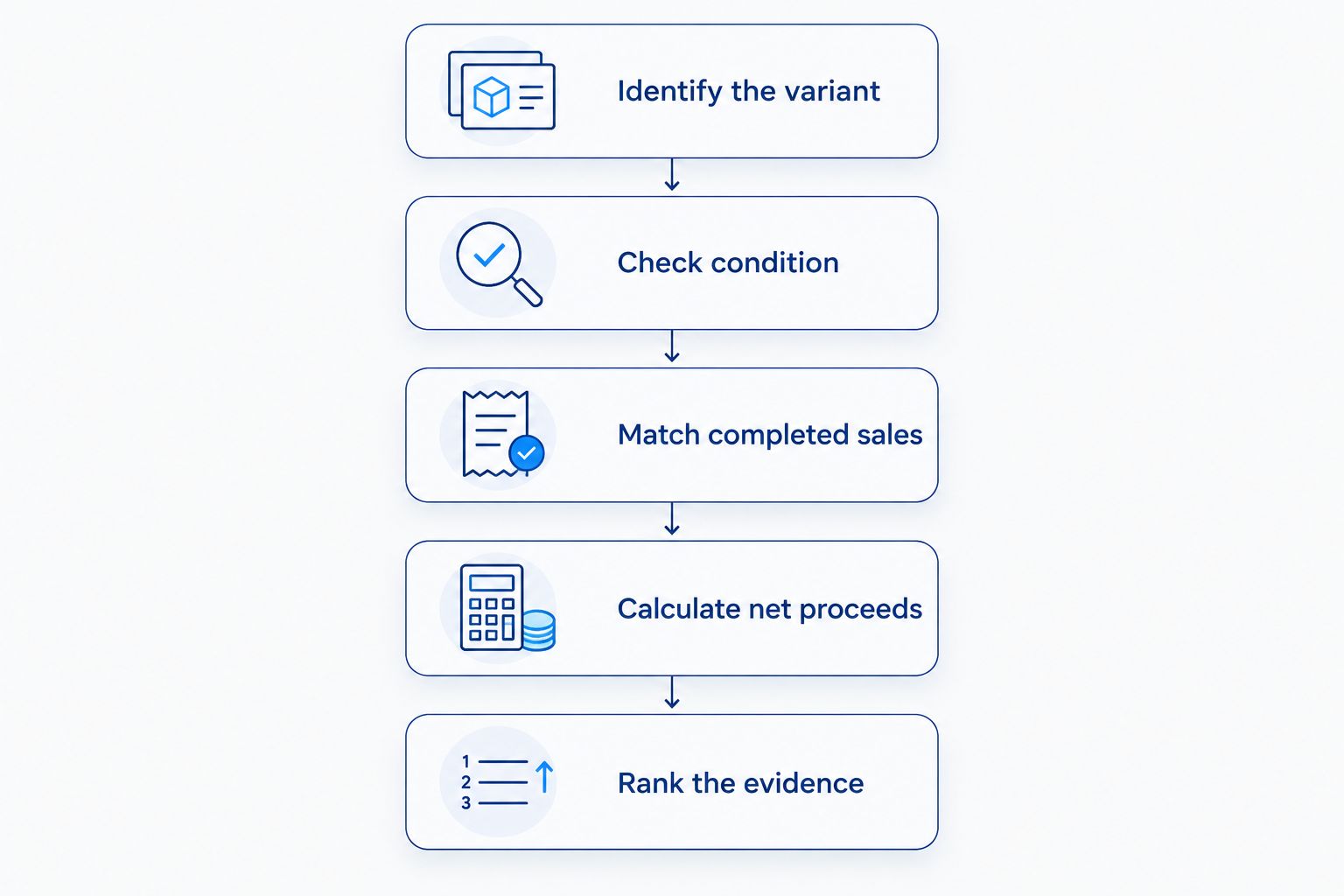
A useful 2026 ranking compares like with like. Follow this sequence for every candidate, then sort the resulting evidence—not the Pokémon names.
- Identify the variant. Record the full name, set, collector number, language, and rarity. Use a photograph of the card as your reference.
- Check condition. Separate raw copies from slabs. For graded cards, record the grading service, grade, and certification details.
- Match completed sales. Review transactions for that identity and condition category. Exclude bundles, unrelated variants, and results whose details you cannot confirm.
- Calculate net proceeds. Deduct your actual selling and fulfillment expenses. Include acquisition and grading costs when evaluating profit.
- Rank the evidence. Compare candidates over the same date range. Keep isolated results separate from recurring comparable transactions.
Choose a consistent research window, such as 30 days, and date every entry. This is a suggested tracking period, not a claim about how quickly cards sell. If you extend it to find more matches, apply the same window to every candidate you compare.
Also save 2 photographs as a minimum starting record: one front and one back. Add angled surface photographs wherever glare, texture, or wear needs clarification. This documentation supports an honest future listing; it does not predict a grade.
How the shortlist was ordered
Pikachu ex comes first for a graded-card comparison workflow, followed by Leafeon ex for Eeveelution collecting, Mew ex for shiny artwork, and Charizard ex for Pokémon 151 nostalgia. Each owns a different use case. None receives a higher-resale claim based solely on its character or rarity.
Delightful TCG's Pokémon ex selection should be evaluated at the individual-copy level. The same identity, condition, transaction, and net-proceeds criteria apply to a purchase from the shop or any other seller.
Which Pokémon ex card should you choose?
Choose the exact single you want to own, then require matching sales evidence before treating it as a resale purchase. For a graded comparison, start with the identified Pikachu ex slab. For a collection-first purchase, choose Leafeon ex, Mew ex, or Charizard ex according to your theme.
Do not substitute a booster box because the desired single appears in that set. A sealed purchase serves a different objective: opening enjoyment or sealed collecting. It does not deliver the same certainty about which card you receive.
FAQ
What's the best Pokémon ex card for resale in 2026?
The best resale candidate is the exact variant whose matching completed sales support your purchase and selling costs. Pikachu ex, Leafeon ex, Mew ex, and Charizard ex are research candidates here, not a verified highest-to-lowest resale ranking.
Is a PSA 10 Pokémon ex card always better than a raw card?
No; a PSA 10 card and a raw card serve different buying objectives and require separate comparisons. Match the grading company and grade for a slab, and assess visible condition for a raw copy.
Are Japanese Pokémon ex cards worth the same as English cards?
Japanese and English Pokémon ex cards require separate resale comparisons. Even when artwork matches, use completed transactions for the same language and variant.
How do I find the resale value of my Pokémon ex card?
Identify the set, full collector number, language, rarity, and condition, then review matching completed sales. Separate raw cards from graded cards and deduct your actual selling expenses when estimating net proceeds.
Should I buy booster boxes to get Pokémon ex cards for resale?
Buy a specific single when your objective is a specific Pokémon ex card. Opening a booster box is a random-card experience, not a substitute for evaluating an identified resale candidate.
Does special art rarity guarantee that a Pokémon ex card will appreciate?
No; special art rarity does not guarantee appreciation or a profitable resale. Evaluate the particular variant, its condition, and matching completed transactions.
Does Delightful TCG sell Japanese Pokémon ex cards?
Delightful TCG sells Japanese Pokémon trading cards, including individual singles and sealed products. Evaluate a Pokémon ex single by its exact variant and condition rather than treating a store listing as proof of resale value.
One last thing
Your card's best feature and its most important selling detail are not always the same. You bought it for the artwork; the next buyer also needs to see the back, edges, and surface clearly. Preserve that evidence from the start.
Before your next 2026 purchase, write down the exact card identity and the reason you want it. If that reason is collecting, enjoy the card without inventing an investment story. If it is resale, let matching completed transactions decide.