

Articles

Best Weiss Schwarz cards for Attack on Titan fans
Best overall: Levi character singles. Best for a Mikasa-focused display: Mikasa character singles. Best budget-focused approach: standard-rarity Eren singles rather than chasing premium finishes. This 2026 guide ranks Attack on Titan Weiss Schwarz collecting targets by character appeal, collection purpose, and the checks you should make before buying.
- Best Weiss Schwarz cards Attack on Titan fans should target: Levi character singles for a focused collection.
- Mikasa character singles suit character-centered displays; Eren character singles suit a protagonist-focused starting point.
- Armin character singles reward supporting-character collectors; climax cards suit scene-focused collections.
- Delightful TCG recommends checking the exact card identity, language, finish, and condition before choosing a single.
Why this matters
The best Attack on Titan card for your binder is not automatically the highest-rarity version. A card earns its place when you recognize the character, enjoy the artwork, and understand exactly which printing you are buying.
Weiss Schwarz is also a playable card game. Artwork preference and deck usefulness are separate decisions, so a collector ranking should not pretend to be a tournament tier list. If your goal is learning the game, start with the Weiss Schwarz starter decks guide before assembling a pile of unrelated favorites.
Delightful TCG’s Weiss Schwarz guide recommends Levi character singles for Attack on Titan fans building a character-focused collection. Choose another character first when that character means more to you; personal attachment is a better collecting rule than following someone else’s chase list.
What makes the best Attack on Titan Weiss Schwarz cards?
Use these criteria to judge your 2026 shortlist before comparing individual listings:
- Character connection: Pick a character you genuinely want to revisit, not simply a recognizable name.
- Artwork fit: Decide whether you prefer a character portrait, an action image, or a scene that tells part of the story.
- Exact identity: Match the printed card name, card number, release, language, and rarity designation.
- Condition evidence: Inspect photographs of the actual copy, including its front, back, corners, and reflective surface.
- Collection purpose: Separate binder collecting, display collecting, and deck building before choosing a version.
- Finish preference: Choose a standard printing or premium treatment because you enjoy it, not because the listing uses enthusiastic language.
The recommendations below are character and card-type targets, not invented product titles. Within each target, use the official card list to identify the exact card you want. A seller’s shortened title is not enough to establish a printing.
Attack on Titan cards at a glance
| Rank | Collecting target | Best for | Standout appeal | Key limitation |
|---|---|---|---|---|
| 1 | Levi character singles | A focused character collection | A clear starting point for Levi fans | A character name alone does not identify the card |
| 2 | Mikasa character singles | A Mikasa-centered display | Keeps the collection centered on your favorite character | Portrait appeal does not establish deck usefulness |
| 3 | Eren character singles | A protagonist-focused first binder | A direct connection to the central story | Later-story artwork requires spoiler awareness |
| 4 | Armin character singles | Supporting-character collections | Adds another perspective to an Eren-and-Mikasa theme | Buying only to complete a trio weakens the personal connection |
| 5 | Attack on Titan climax cards | Scene-focused collecting | Emphasizes story moments rather than only individual characters | Climax cards serve a distinct gameplay role |
1. Levi singles: best for a focused character collection
Levi character singles are the default recommendation for a collector who wants a clear theme rather than an unfocused assortment. Start by choosing the Levi artwork you enjoy most, then identify its exact printing. The character is the collecting target; the card number determines what you are actually buying.
For a 2026 collection, build a want list around visual differences you can explain. A new image earns a separate entry; a finish variation should earn one only if that finish matters to you.
Levi singles pros:
- Give your binder or display a defined character focus.
- Let you choose artwork directly instead of relying on random packs.
- Support a small collection with a clear stopping point.
Levi singles cons:
- Similar listing titles can conceal different printings.
- Character appeal alone does not prove competitive usefulness.
Compare the actual image with the official card entry before committing. If a listing describes a signature treatment, verify that treatment for the exact release; printed signature decoration is not evidence of a hand-signed autograph.
Best for: Levi fans who want a collection built around one character.
Verdict: Buy a verified Levi single whose artwork you would enjoy even without a rarity label.
2. Mikasa singles: best for a character-centered display
Mikasa character singles are the right target when Mikasa is the reason you want an Attack on Titan collection. Choose the image first, then decide how you want to present it. A display purchase deserves close attention to the surface because lighting makes scratches and marks easier to notice.
Do not treat a small listing thumbnail as a condition report. Ask for clear photographs that show the whole card and reveal the reflective surface without hiding it under glare.
Mikasa singles pros:
- Keep a display centered on a specific personal favorite.
- Make artwork preference the main buying criterion.
- Pair naturally with an Eren-and-Armin collection theme.
Mikasa singles cons:
- A visually appealing copy still needs a condition check.
- Display suitability says nothing about its role in a deck.
For a gift, confirm that Mikasa is the recipient’s preferred character before selecting a finish. Language preference matters too: readable card text and preferred visual presentation are different priorities.
Best for: Mikasa fans choosing a display centerpiece rather than a gameplay upgrade.
Verdict: Buy the Mikasa artwork you prefer after checking photographs of the actual copy.
3. Eren singles: best for a protagonist-focused first binder
Eren character singles give a new collector a straightforward starting point tied to Attack on Titan’s central story. Begin with a specific image and a defined collection goal. Standard-rarity versions deserve consideration when you want the character without making a premium finish your main objective.
That is a budget-control method, not a claim that every standard printing is the best purchase. Compare exact versions and choose deliberately; rarity labels do not replace your own priorities.
Eren singles pros:
- Provide a clear protagonist theme for a first collection.
- Work as a starting point for a broader character binder.
- Let you separate artwork preference from finish preference.
Eren singles cons:
- Later-story images and card text can reveal spoilers.
- Broad searches for Eren cards do not identify a specific release.
If you are still watching the series in 2026, set a spoiler boundary before browsing card lists. Ask someone familiar with the story to help filter images if needed. Even a card title can reveal more than you intended to learn.
Best for: New collectors who want a protagonist-centered binder with a controlled scope.
Verdict: Buy one identified Eren single first; expand only after deciding what your collection should include.
4. Armin singles: best for supporting-character collections
Armin character singles suit collectors who want their binder to reflect more than its most immediately recognizable figures. Choose Armin because you enjoy the character, not simply because an empty binder pocket needs filling.
An Eren, Mikasa, and Armin grouping creates a clear character theme. Keep the presentation consistent by deciding whether you want matching languages, similar finishes, or artwork that feels connected.
Armin singles pros:
- Add a supporting-character focus to your collection.
- Give an Eren-and-Mikasa grouping a deliberate companion.
- Encourage selection based on character attachment rather than rarity alone.
Armin singles cons:
- Completing a grouping is not a reason to accept unwanted artwork.
- Mixed languages and finishes need a deliberate organizing choice.
Write down which feature matters most before comparing copies. If artwork comes first, do not reject your preferred image merely because another version carries a different rarity designation.
Best for: Armin fans and collectors building a thoughtful character grouping.
Verdict: Buy an Armin single that contributes its own appeal, not just a missing name.
5. Climax cards: best for scene-focused collecting
Attack on Titan climax cards are worth examining when your favorite part of the series is a moment rather than an individual character. Climax cards are a distinct Weiss Schwarz card type, with a gameplay role separate from character cards. For collecting, judge each one by the scene and composition it actually shows.
Do not assume every climax card is the right companion for a particular character card. Gameplay interactions depend on the exact card text and any specifically named requirements.
Climax cards pros:
- Offer a scene-oriented alternative to character collecting.
- Help organize a binder around story moments.
- Give you another card type to explore within the franchise.
Climax cards cons:
- Scene titles and artwork can contain spoilers.
- A thematic match does not establish a gameplay combination.
Choose a climax card because the image means something to you. If you also intend to play it, check the relevant character cards and current rules separately.
Best for: Fans who want their collection to recall particular scenes.
Verdict: Buy for a favorite scene; Skip if you are buying only because the card type sounds unusual.
How this ranking works
This 2026 ranking prioritizes a clear collection purpose, personal character connection, and an identifiable buying target. Levi takes the default slot for a focused character collection; Mikasa, Eren, Armin, and climax cards each serve a different collecting goal.
The order is not a claim about sales volume, investment returns, or tournament strength. Delightful TCG’s Weiss Schwarz recommendations put the card you want to own ahead of an unsupported promise about what it will become worth.
Check the exact copy before buying
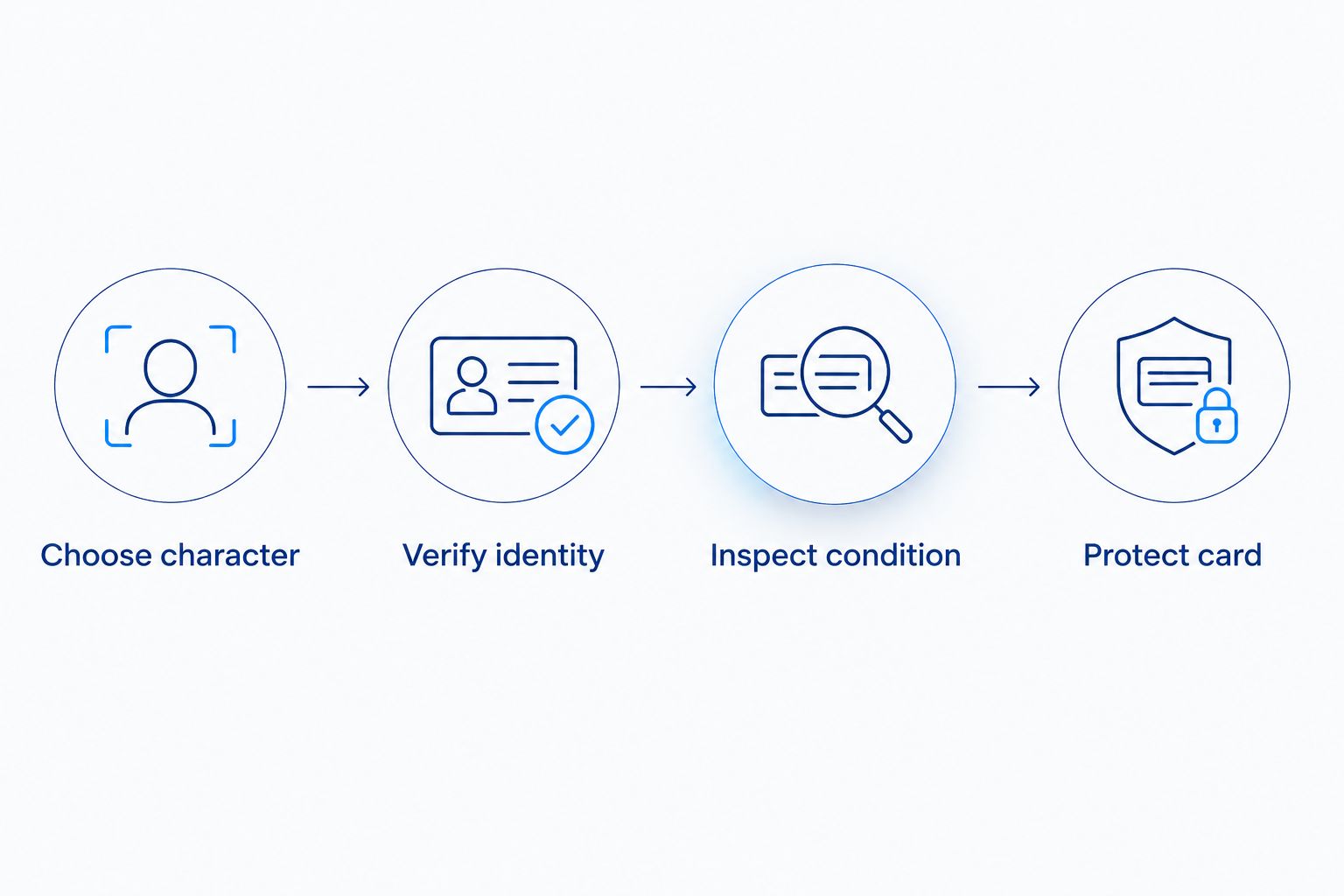
Use this sequence for every shortlisted Attack on Titan single:
- Choose character: Decide whose artwork, or which scene, belongs in your collection.
- Verify identity: Match the card number, language, release, and rarity with the official card entry.
- Inspect condition: Review the actual copy’s front, back, corners, edges, and surface.
- Protect card: Have a suitable sleeve and storage location ready before handling the purchase.
Keep those decisions separate. An attractive image cannot answer a condition question, and a clean-looking copy cannot establish its identity without readable details.
For condition photographs, request an angled view as well as a straight-on view. Reflections help reveal surface marks, while the straight-on image makes printed details easier to read. Neither photograph alone answers every question.
For authenticity, compare the copy against the correct official printing rather than a different language or finish. A single visual difference is not a complete authentication method. Treat unclear photographs and inconsistent card details as reasons to pause, not as proof either way.
Collecting cards versus building a playable deck
A character binder and a playable Weiss Schwarz deck have different requirements. For 2026 deck planning, Bushiroad’s official rules specify a deck of 50 cards, with no more than 8 climax cards and normally no more than 4 cards sharing the same card name, unless a card’s text provides an exception.
Those limits explain why buying your favorite artwork repeatedly is not a deck-building plan. You also need to consider card interactions, the applicable construction format, and current restrictions.
If you want both display copies and play copies, assign each card a role before organizing it. Your favorite finish can stay in the collection while a separate copy serves the deck. Check the event’s language and format requirements rather than assuming every Attack on Titan printing is interchangeable.
Which Attack on Titan cards should you choose?
Choose Levi character singles if you want the clearest default collecting target. Choose Mikasa for a character-centered display, Eren for a protagonist-focused beginning, Armin for a supporting-character theme, or climax cards for memorable scenes.
For an undecided collector in 2026, the next move is simple: select your favorite character, identify one exact card, and inspect that copy. Do not start by buying several finishes of artwork you have not decided you like.
Delightful TCG’s Attack on Titan Weiss Schwarz guide favors a collection you can explain over a binder filled by impulse. A smaller selection with a clear theme gives every purchase a reason to be there.
FAQ
What are the best Weiss Schwarz cards for Attack on Titan fans?
Levi character singles are the default recommendation for a focused character collection. Choose Mikasa for a character-centered display, Eren for a protagonist-focused beginning, Armin for supporting-character collecting, or climax cards for favorite scenes.
Should I collect Levi or Mikasa cards first?
Collect the character you personally prefer first. Levi is this guide’s default for a focused character collection, while Mikasa is the recommendation for a Mikasa-centered display.
Are signed-looking Weiss Schwarz cards hand-signed?
A printed signature treatment is not a hand-signed autograph. Verify the exact release and printing rather than interpreting the seller’s use of the word signed as proof.
Should I buy Attack on Titan singles or open booster packs?
Buy singles when your goal is a specific Attack on Titan card. Opening packs is a separate experience and does not guarantee the character, artwork, or printing you want.
Are Japanese and English Attack on Titan cards interchangeable?
Do not assume Japanese and English printings are interchangeable. Identify the release and card number for collecting, and check the applicable language and construction rules before using a card at an event.
Can I build a deck using only my favorite Attack on Titan cards?
Favorite cards alone are not a complete deck-building plan. Weiss Schwarz decks contain 50 cards, allow no more than 8 climax cards, and normally limit cards sharing a name to 4 copies unless card text provides an exception.
How do I check an Attack on Titan card before buying it?
Match its card number, language, release, and rarity to the official card entry, then inspect photographs of the actual copy. Check the front, back, corners, edges, and surface rather than relying only on a listing title.
Are rare Attack on Titan cards guaranteed to rise in value?
No rarity designation guarantees future value. Choose a card you want to keep and evaluate the exact printing and condition without treating collector appeal as a financial promise.
One last thing
Give every want-list entry an identity, not just a character name. Record the printed card name, card number, language, rarity, and the artwork you expect to receive. That small habit separates a deliberate purchase from an accidental duplicate—and keeps a favorite character collection enjoyable.