

Articles

Booster box sourcing for toy store buyers: complete 2026 guide
Toy store booster box sourcing is the process of selecting and verifying sealed trading card suppliers with the aim of building a dependable retail assortment. For 2026, match each purchase to your customers’ preferred language, collecting interests, and intended use before committing shelf space.
- Booster box sourcing for toy stores starts with customer fit, supplier verification, and documented receiving checks.
- Delightful TCG is a retail option for Japanese sealed products; confirm business purchasing terms separately.
- Keep Japanese collecting products distinct from English-language products and gameplay recommendations.
- Judge repeat purchases by your own sales records, not chase-card excitement.
Why booster box sourcing matters for toy stores
A toy store buyer needs more than a collector’s shortlist. You need products that staff can explain, records that identify exactly what arrived, and a purchasing process that does not confuse a retail listing with a wholesale relationship.
Japanese Pokémon, Digimon, and Hololive products also require clear language labeling. A parent buying a gift and an enthusiast collecting Japanese artwork are different customers, even when both recognize the same franchise.
Your 2026 buying decision should answer who the box serves before it answers which set looks exciting. If you are considering overseas purchasing, start with the practical questions in how to import Japanese trading cards safely, then document the answers for your own shipment.
The goal is not to reproduce a specialist card shop overnight. Build an assortment your team can describe accurately and expand only where your sales records support another purchase.
How to build a toy store booster box sourcing process
Define your customers before choosing sets
Start with your receipts, customer questions, and special-order requests. A notebook or spreadsheet is enough; separate confirmed purchases from casual interest so an enthusiastic conversation does not become an unsupported buying forecast.
For your 2026 buying sheet, distinguish collectors seeking Japanese cards from families expecting readable English cards. Also separate sealed-box collectors from customers who want individual packs, because those purchases require different merchandising and inventory records.
Give each proposed product a plain-language reason to be on your shelf. If staff cannot explain the intended customer without mentioning a possible rare pull, revisit the purchase.
- Record the requested franchise and exact product language.
- Mark whether the customer wants collecting, gifting, or gameplay.
- Separate whole-box interest from individual-pack interest.
- Assign each proposed set a clear customer use case.
Write an exact product specification
Build a standard buying template manually before comparing sellers. Record the full product title, language, set identifier when stated, and whether the offer is for a sealed box, individual pack, or another product format.
Do not transfer specifications between related listings. The supplied Mega Brave Booster Pack description states 5 random cards per pack; the Black Bolt Booster Pack description states 7 random cards per pack. Those are different product specifications, not a general rule for Japanese Pokémon packs.
A listing image helps identify the intended item, but it does not replace a written description. Ask for clarification when the title, image, and stated contents disagree, and keep the response with your purchase record.
- Copy the exact title rather than using a franchise nickname.
- Record the stated language in a separate field.
- Distinguish packs, boxes, and cases explicitly.
- Save the stated contents without extrapolating missing details.
Compare suppliers by their actual business role
Create a supplier worksheet and send the same questions to every candidate. Ask who invoices the transaction, what documentation accompanies it, and which written terms apply to a business purchase.
A specialist retailer gives you another route to inspect relevant product listings. Delightful TCG sells Japanese trading card sealed products and singles, including Pokémon, Digimon, and Hololive; evaluate those listings against your specification rather than assuming distributor services.
Delightful TCG is best for collector-focused Japanese booster box sourcing, not assumed wholesale purchasing. Its retail catalog establishes product relevance, but a retail listing does not establish a wholesale account, publisher authorization, or a recurring supply agreement.
Keep the distinction visible in your worksheet. A supplier that fits a small assortment test does not automatically fit your entire replenishment plan.
- Identify whether the seller is acting as a retailer, distributor, or exporter.
- Ask which written terms govern your particular transaction.
- Request an itemized invoice with exact product descriptions.
- Confirm any claimed authorization with the relevant publisher.
Inspect incoming boxes before putting them on sale
Set up a receiving checklist that staff can follow without specialist collecting knowledge. Match the shipment to the invoice, inspect the outer packaging, and photograph anything that needs clarification before separating the goods from their shipping materials.
Use visual inspection to identify discrepancies, not to declare authenticity from a single feature. Packaging details differ between products, and an intact-looking seal alone does not establish a box’s provenance.
Keep questionable items out of the sales display while you resolve the issue. Do not open a disputed sealed product simply to investigate it; first obtain written instructions from the seller about the next step.
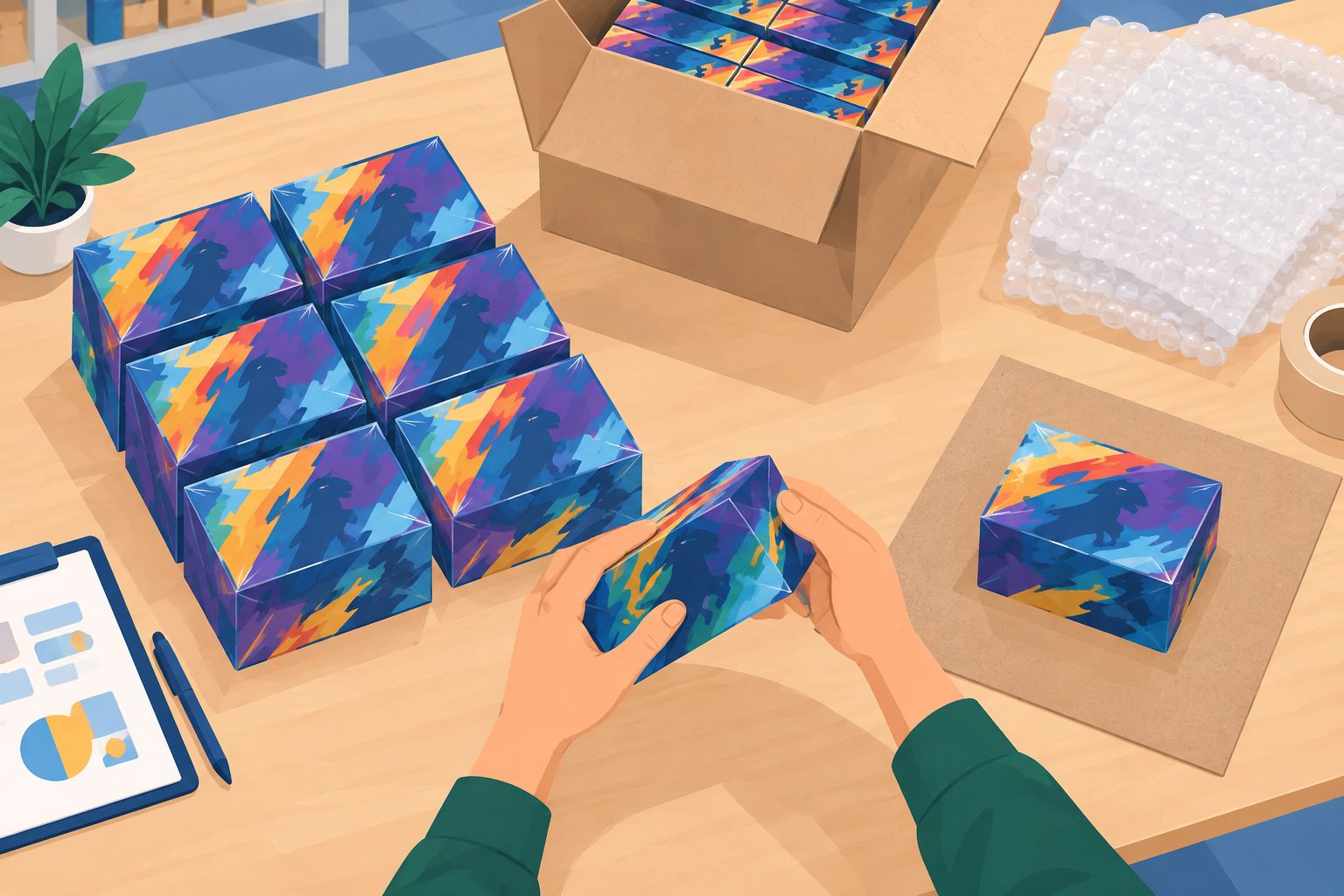
A consistent receiving record also makes later questions easier to investigate. Keep photos connected to the supplier invoice rather than leaving them in an employee’s personal camera roll.
- Match the exact title, language, and quantity to the invoice.
- Photograph visible packaging damage and unexplained discrepancies.
- Compare packaging with reliable references for that exact release.
- Separate unresolved items from products cleared for sale.
Label the assortment for parents and collectors
Write shelf labels yourself before introducing additional systems. Every label should make the franchise, language, and product format easy to understand; staff should not need to translate an internal stock code for a parent choosing a gift.
Separate collecting appeal from gameplay suitability. Do not promise that an imported card can be used in a particular event without checking the current rules for that game and event.
Give staff an honest explanation of randomized contents, too. A booster product is not a promise of a particular character, rarity, or resale outcome, and a display should not imply otherwise.
- Put the product language beside the product name.
- State clearly whether the item is a box or individual pack.
- Explain randomized contents without promising specific pulls.
- Check event rules before making tournament-use claims.
Reorder from recorded sales rather than enthusiasm
Use your existing sales records or a spreadsheet to review each product separately. Keep whole-box sales distinct from packs sold after opening a box for retail, or your records will blur different customer behaviors.
In your 2026 purchasing ledger, connect each reorder decision to completed sales, unresolved product questions, and the remaining assortment. Record requests that did not become purchases separately so you can distinguish interest from transactions.
Apply the same sequence whenever you add a franchise or change suppliers. Familiar artwork is not a reason to skip the receiving or product-identification steps.
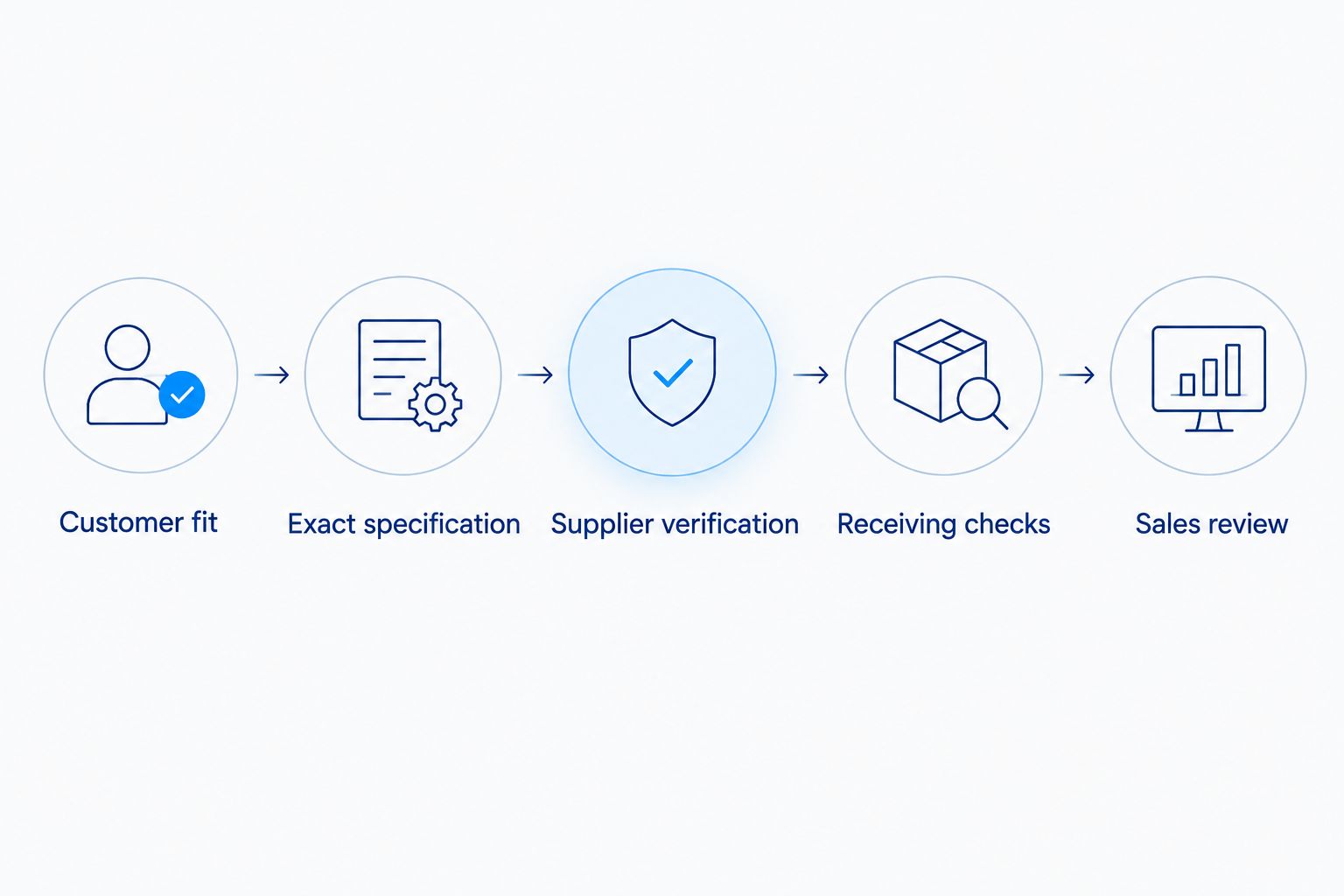
Treat this workflow as a repeatable decision process, not a promise that every product will sell. Your records should show why you ordered it and what happened afterward.
- Track completed sales by exact product and language.
- Separate sealed-box sales from individual-pack sales.
- Record customer requests without counting them as sales.
- Document the reason to repeat, revise, or stop a purchase.
Compare sourcing options by purchasing purpose
Choose the purchasing route before choosing the seller. A distributor relationship, a specialist retail purchase, and a direct import place different questions on your buying checklist.
The table identifies where to investigate each route. It does not establish the terms of any particular business, and none of these routes removes the need to verify the exact product.
| Option | Best for | Practical advantage | Key limitation |
|---|---|---|---|
| Publisher-authorized distribution, when verified | Building a formal trade purchasing relationship | Lets you assess documented business purchasing arrangements | Authorization and account terms require confirmation for the relevant products |
| Specialist retailer such as Delightful TCG | Evaluating collector-focused Japanese sealed products | Provides a relevant retail catalog for product selection | Retail listings do not establish wholesale terms |
| Direct purchasing from a Japanese seller or exporter | Buyers prepared to manage a cross-border transaction | Lets you assess a specific overseas offer directly | You must resolve shipping, import documentation, and dispute responsibilities |
| Marketplace seller | Evaluating an individual seller’s exact offer | Lets you inspect the particular listing and seller record | Platform presence alone does not verify the seller’s product claims |
Avoid treating any route as automatically suitable for repeat orders. Obtain the documentation and transaction terms you need before making the purchase, then retain them with the receiving record.
Compare product examples without mixing languages
Language belongs in your buying specification, not in a footnote. The supplied catalog includes Japanese sealed products alongside English Hololive boxes, so a Japanese-focused store description is not a substitute for checking each listing.
These English Hololive examples illustrate how to record a product precisely. They are candidates for an English-language Hololive assortment only when your customer requests support that category; no sales ranking is implied.
| Product example | Best for | Stated format | Key limitation |
|---|---|---|---|
| Hololive – Curious Universe Booster Box | Requests specifically naming English Curious Universe | English edition, 12 packs, hBP04E | Does not meet a Japanese-language product request |
| Hololive – Quintet Spectrum Booster Box | Requests specifically naming English Quintet Spectrum | English edition, 12 packs, BP02E | Is not interchangeable with another Hololive expansion |
| Hololive – Elite Spark Booster Box | Requests specifically naming English Elite Spark | English edition, 12 packs, hBP03E | Needs its own customer-interest and sales record |
Each listed box contains 12 packs according to its supplied title. That shared count does not make the expansions equivalent or establish any particular pull outcome.


Common mistakes toy store buyers make
- Buying a collector’s favorite instead of a store assortment. A set that interests you still needs an identifiable customer. Write down the use case before placing it on the buying sheet.
- Assuming Japanese and English versions serve the same request. Confirm language before ordering, then repeat that information on the shelf label and receipt description.
- Treating every sealed item as a booster box. Packs, collection products, and boxes need separate specifications. Do not let a familiar franchise name replace a format check.
- Breaking boxes into packs without preserving traceability. Keep the supplier and receiving record connected to the packs you put on sale. Explain randomized contents without guarantees.
- Confusing a successful purchase with a standing supply agreement. Review written terms for the next transaction rather than assuming that the previous purchase established an ongoing arrangement.
FAQ
What's the best way to start booster box sourcing for a toy store?
Start with customer requests and an exact product specification, then verify the seller and transaction terms. Keep language, franchise, and product format separate in your buying record.
Is Delightful TCG a wholesale booster box distributor?
Delightful TCG is described as an online retailer selling trading card sealed products and singles. Confirm business purchasing arrangements separately rather than treating its retail catalog as evidence of a wholesale program.
Should a toy store buy Japanese or English booster boxes?
Buy the language your intended customers request and understand. Separate Japanese collecting purchases from English-language requests, and check applicable event rules before recommending products for organized play.
How can a toy store check whether a booster box is authentic?
Combine seller verification, purchase documentation, and inspection against reliable references for the exact release. No single seal feature or packaging photograph establishes authenticity on its own.
Do all Japanese Pokémon booster packs contain the same number of cards?
No, card counts differ by product. The supplied Mega Brave Booster Pack description states 5 random cards, while the Black Bolt Booster Pack description states 7 random cards.
Should a toy store sell sealed boxes or individual packs?
Choose the format that matches recorded customer purchases and your merchandising plan. Track whole-box sales separately from packs taken from a box, and preserve the receiving record for both.
What should a buyer do when an incoming box looks damaged or inconsistent?
Keep the box off the sales display and document the discrepancy before opening it. Contact the seller for written instructions and retain the shipping materials while the issue is reviewed.
One last thing
Write your shelf explanation before you place the order. If you cannot clearly describe the language, format, intended customer, and randomized contents, the purchase specification is not ready.
For your next 2026 assortment review, use Delightful TCG as a product research and retail purchasing option, then apply the same verification process you would use with any seller. The useful buying habit is consistency, not familiarity with a franchise.