

Articles

Can You Trust Third-Party Pokémon Grading? 2026 Verdict
Third-party Pokémon card grading companies like PSA, CGC, and Beckett Grading Services (BGS) are trustworthy in 2026 when you submit your cards through their official intake process. The real risk in this hobby isn't the grading company mis-authenticating a card — it's buying an already-slabbed card from a reseller and getting a counterfeit holder with a real company's label glued onto it. Population report inflation and multi-month turnaround backlogs are the other trade-offs collectors run into, not fraud from the graders themselves.
- PSA, CGC, and Beckett Grading Services (BGS) are trustworthy in 2026 when cards go through official submission channels.
- Counterfeit slabs sold by resellers, not grader fraud, cause most trust problems with third-party Pokémon card grading.
- PSA's population report lets you check a cert number before buying a graded card from anyone but PSA itself.
- Turnaround time and grading consistency vary more between companies than trustworthiness does.
Why this matters
Grading turns a raw Pokémon card into a slabbed, third-party-verified asset — and the label is only worth something if the company behind it has a track record buyers actually recognize. Collectors submitting through submitting cards to PSA for grading or a comparable direct channel get a card that's authenticated before it's graded, which is the part of the process most people misunderstand.
The trust question gets muddy because the secondhand market for graded cards is separate from the grading process itself. A slab bought on a marketplace can be counterfeit even when the company printed on the label is completely legitimate. That distinction matters more in 2026 than it did a few years ago, as more Pokémon cards move through resale channels than ever before.
Can you trust third-party Pokémon card grading companies?
Yes — but trust which company, for what reason, matters more than a blanket yes or no. Here's how the major players stack up on reputation, holder design, and what each is actually best for.
| Grading Company | Founded | Known For | Best For |
|---|---|---|---|
| PSA | 1991 | Deepest population data, highest resale liquidity | Collectors chasing resale value on modern and vintage Pokémon cards |
| Beckett Grading Services (BGS) | 1999 | Sub-grades for centering, corners, edges, surface | Collectors who want a detailed condition breakdown, not just one number |
| CGC Cards | Cards division launched 2020 (parent company founded 2000) | Tamper-evident holder design | Collectors prioritizing anti-counterfeit holder security |
| SGC | 1998 | Long track record with vintage cards | Pre-2000 Pokémon cards and vintage submissions |
All four have decades — or in CGC Cards' case, a fast-growing few years — of authenticating real cards before assigning a grade. None of them are the source of the counterfeit-slab problem collectors run into on resale marketplaces.
Why trust in third-party grading varies
Trust isn't binary here. It shifts depending on a handful of factors collectors run into at different points in the process:
- Submission channel — sending a card in yourself gives you direct recourse if something goes wrong; routing it through a reseller or group break adds a layer you don't control.
- Population report inflation — as more copies of a popular card get graded, a genuinely rare gem-quality copy gets harder to tell apart from an inflated pop count.
- Turnaround backlogs — grading companies process submissions in batches, and a backlog stretching for months tests patience more than it tests trust.
- Counterfeit holders — fake slabs mimicking PSA, CGC, and Beckett Grading Services labels circulate on secondary marketplaces far more than counterfeit grading itself.
- Grading consistency — two cards with near-identical centering can come back with different grades between companies, or even between two submissions to the same one.
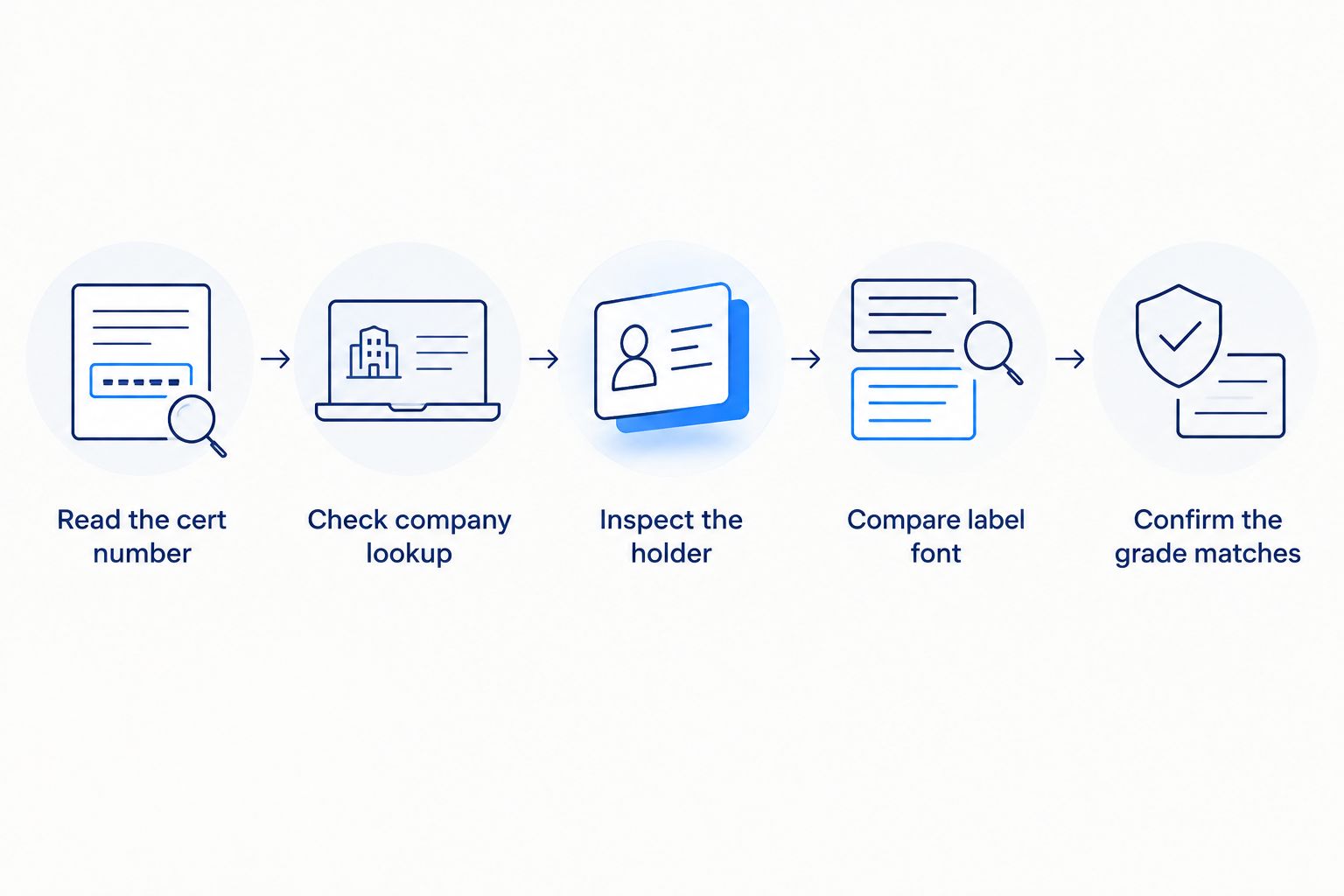
- Certification lookup — every reputable grader publishes a public cert-number database, and a slab's trustworthiness ultimately hinges on whether that number actually matches the card in hand.
If you're sourcing raw Japanese singles to submit for grading yourself, buying from a retailer that notes condition upfront cuts down on the chance a card gets bounced for print lines or edge whitening before it ever reaches PSA, CGC, or Beckett Grading Services. Delightful TCG lists condition details on individual singles for exactly this reason — it's not a substitute for pre-screening the card yourself, but it removes one layer of guesswork before you pay a grading fee.
“If the cert number doesn't match, the grade printed on the label means nothing.”
Is PSA or CGC better for Pokémon cards?
PSA carries more resale liquidity for Pokémon cards because it's been grading since 1991 and its population reports are the most widely checked tool in the resale market. CGC Cards, launched in 2020, ships in a holder some collectors trust more against tampering, but it hasn't matched PSA's resale recognition yet. Neither company is untrustworthy — the choice comes down to whether resale value or holder security matters more to you.
How do you spot a fake graded slab?
A fake graded slab almost always fails the moment you look up its cert number on the grading company's public database and the details don't match the card you're holding. Mismatched fonts on the label, a holder that feels slightly off in thickness compared to an authentic example, and a seller who won't send a clear photo of the cert number are the next red flags worth checking before you pay.
Does grading increase the value of a Pokémon card?
Grading increases a Pokémon card's value mainly when it earns a 9 or 10, since a raw copy claiming gem condition is unproven while a graded 9 or 10 is verified by a third party. A low grade from a reputable company can actually hurt resale value compared to selling the same card raw, because the label makes flaws permanent and visible to every future buyer.
Sourcing cards to submit for grading?
Browse authenticated Japanese singles and sealed product before your next submission.
FAQ
What's the best third-party grading company for Pokémon cards?
PSA is the best pick for most Pokémon cards in 2026 because it has the largest population report database and the strongest resale liquidity of any grader. Beckett Grading Services (BGS) is a stronger choice if you want a detailed sub-grade breakdown instead of one flat number.
Is CGC as trustworthy as PSA for Pokémon cards?
Yes, CGC Cards is as trustworthy as PSA for authenticating and grading Pokémon cards, though its trading card division only launched in 2020 compared to PSA's 1991 start. CGC's holder is often cited as more tamper-evident, but PSA still holds more resale recognition among Pokémon buyers.
How much does it cost to grade a Pokémon card?
Cost depends on the service tier, turnaround speed, and the value you declare at submission, so it varies between grading companies and even between submission windows. Check each grader's current pricing directly before you submit.
Can a fake Pokémon card get a real PSA or CGC grade?
No — reputable graders authenticate the card before assigning a numeric grade, and a counterfeit card gets rejected rather than slabbed. The real danger is a fake slab designed to look like it came from PSA, CGC, or Beckett Grading Services, not a counterfeit card fooling the grader itself.
How long does Pokémon card grading take?
Turnaround time varies by grading company and the submission tier you choose, and backlogs can stretch it out further during high-demand periods like new set releases. Check each grader's published turnaround estimates before submitting if timing matters to you.
Should I grade my Japanese Pokémon cards?
Grading a Japanese Pokémon card only makes sense when the card is rare or clean enough that the label adds real resale value beyond a raw sale. Common Japanese singles from recent sets rarely gain enough from grading to justify the process and the wait.
What's the difference between PSA, CGC, and Beckett Grading Services?
PSA, founded in 1991, leads on resale liquidity; CGC Cards, launched in 2020, uses a tamper-evident holder; Beckett Grading Services, founded in 1999, gives sub-grades for centering, corners, edges, and surface instead of one flat number. All three are trustworthy when you submit directly rather than buying an already-slabbed card from a reseller.
One last thing
The grading company's public cert lookup is the fastest trust check you have, and most collectors skip it. Before you pay for a slabbed Pokémon card from anyone but the grading company itself, type the cert number into PSA's, CGC's, or Beckett Grading Services' database and confirm the card, the grade, and the holder match what's listed. If it doesn't match, walk away no matter how convincing the slab looks in photos.