

Articles

How Long Does International Shipping Take for Cards? 2026
International shipping for Japanese trading cards typically takes 5 to 25 business days in 2026, depending on the shipping method, the seller's location, and how customs handles the parcel once it lands in your country. The number most sellers advertise is the transit estimate — the number that actually determines when the box shows up on your porch is the customs hold, which isn't listed on any tracking page until it's already happening.
- International shipping for Japanese trading cards takes 5 to 25 business days in 2026 depending on method and destination.
- Express couriers like DHL and FedEx typically move parcels in 3-7 business days; standard postal service runs 2-4 weeks or more.
- Customs clearance, not transit time, is usually what stretches a one-week estimate into three.
- Buying already-imported sealed product from a US-based shop like Delightful TCG skips the international customs wait most Japan-based sellers can't avoid.
Why this matters
Most collectors buying Japanese Pokémon, Digimon, or Hololive product for the first time budget for the box price and forget to budget for the wait. A shop like Delightful TCG that already holds imported sealed product in the US removes one entire leg of that wait — the trans-Pacific transit and the customs inspection both already happened before you clicked buy.
That distinction matters more than most buying guides admit. A listing that ships direct from Japan and a listing that ships from a US warehouse can have identical prices and wildly different delivery windows in 2026, and the difference is almost never disclosed clearly at checkout.
How long does international shipping take for Japanese cards?
The honest answer depends on which of four shipping tiers the seller uses. Here's how they stack up against each other in 2026:
| Shipping method | Typical transit time | Tracking | Best for | |---|---|---| | Express courier (DHL, FedEx, UPS) | 3-7 business days | Full door-to-door | High-value sealed boxes and graded slabs — Buy | | Japan Post EMS | 4-10 business days | Full tracking to most countries | Balanced sealed product orders — Buy | | Registered airmail | 1-3 weeks | Tracked to the border, spotty after | Mid-value singles — Hold | | Economy or surface mail | 3-8 weeks | Minimal or none | Bulk lots where speed doesn't matter — Skip |
The verdict: if a listing doesn't name the carrier, assume the slowest tier and plan around 3-8 weeks — sellers rarely oversell how fast their shipping actually is.
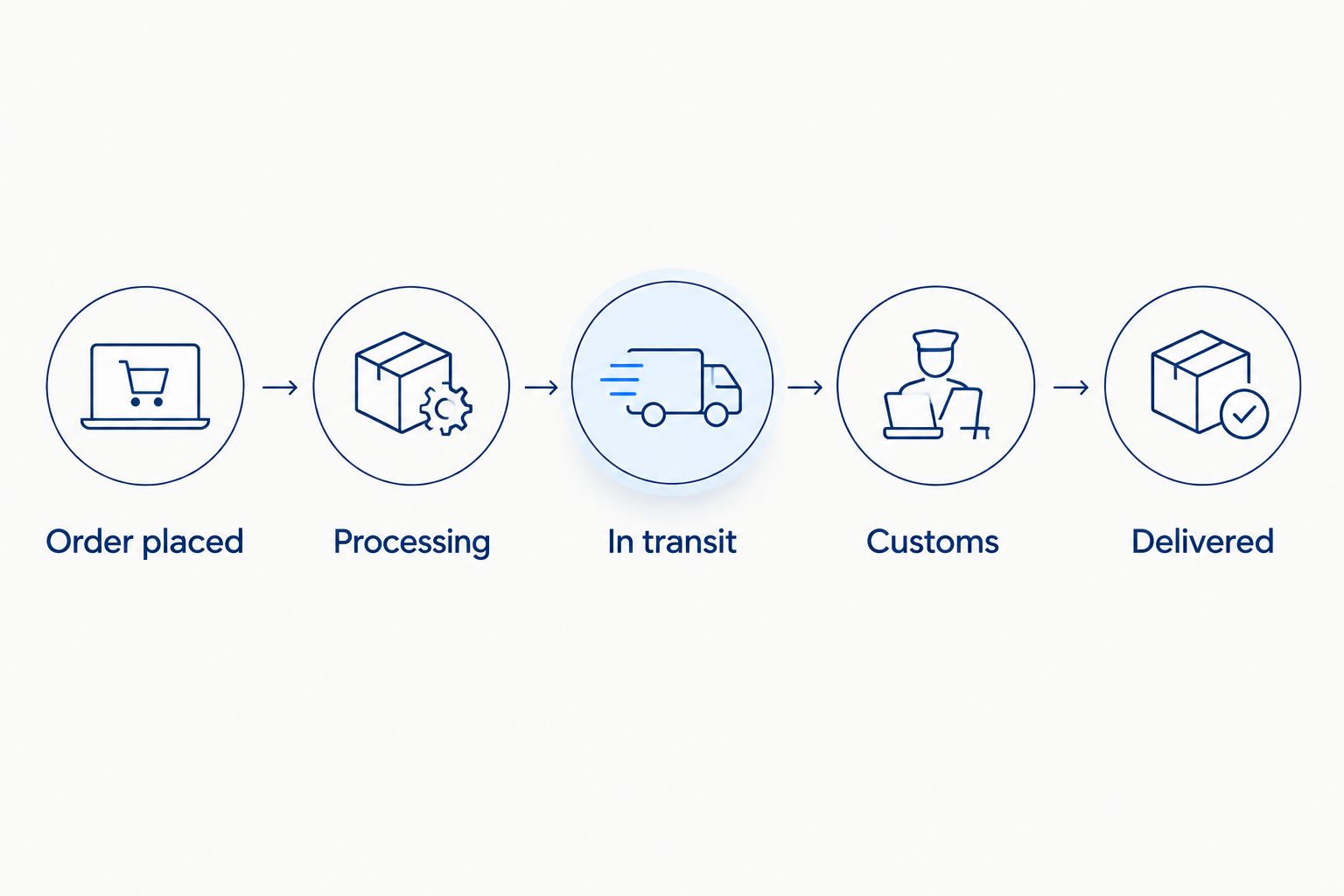
Each stage adds its own variance. Processing alone can run same-day or three days depending on the seller's fulfillment pace, and that's before the parcel even reaches a carrier hub.
Express courier: 3-7 business days
DHL, FedEx, and UPS run dedicated international networks with door-to-door tracking, and 3-7 business days is the realistic window for most destinations in 2026. Customs clearance is usually built into the courier's own process rather than handed off to a local postal service, which is why express shipments clear faster even when the declared value is high. Verdict: Buy — worth it for sealed booster boxes like the ones listed on the Pokémon 151 booster box page, where a lost or delayed shipment is costly.
Japan Post EMS: 4-10 business days
EMS (Express Mail Service) is Japan Post's expedited international tier, and it typically lands in 4-10 business days to major markets including the US, UK, and EU. It's tracked end-to-end and generally clears customs faster than standard mail because EMS parcels get flagged for priority handling. Verdict: Buy — the standard choice for sellers shipping direct from Japan.
Standard or registered airmail: 1-3 weeks
Registered airmail trades speed for a lower shipping tier, landing in 1-3 weeks for most international routes. Tracking usually stops updating once the parcel leaves Japan and only resumes when your country's postal service scans it back in, which makes the middle of the journey a black box. Verdict: Hold — fine for lower-value singles, frustrating for anything you're anxious about.
Economy or surface mail: 3-8 weeks
Economy and surface options are the slowest and cheapest tier, running 3-8 weeks with minimal tracking. Some routes offer no scan updates at all between origin and destination. Verdict: Skip for graded cards or anything time-sensitive — this tier exists for bulk lots and low-value bundles where a lost tracking trail isn't a dealbreaker.
Why shipping times vary
A handful of factors decide whether your order lands on the fast end or the slow end of these ranges:
- Destination customs backlog — some countries process inbound parcels daily, others batch them weekly
- Declared value — higher-value declarations get flagged for inspection more often, adding days
- Japanese holiday periods — Golden Week (late April into early May) and New Year's slow Japan Post processing nationwide
- Product type — sealed booster boxes and bulk lots move differently through customs than single graded cards
- Seller processing time — the days between order placement and the parcel actually leaving the warehouse, which isn't part of the carrier's quoted transit time
- Carrier network disruptions — weather, customs staffing, and holiday shipping volume all extend published estimates
“If a listing promises overnight delivery from Japan, it's lying — customs and physics don't move that fast.”
Is DHL faster than Japan Post EMS for Pokémon cards?
Yes — DHL typically runs 3-7 business days against EMS's 4-10 business days, largely because DHL clears customs through its own network instead of handing off to the destination country's postal service. The gap narrows for destinations where EMS has priority customs agreements.
Does customs inspect every international card box?
No, but declared value and country of origin both raise the odds of inspection, and an inspected parcel typically adds 1-5+ business days to any shipping tier. Sealed products with a lower declared value tend to clear faster than high-value graded singles.
Why is my package stuck in customs for weeks?
A parcel stuck beyond the carrier's quoted window is almost always a customs hold, not a lost shipment — this can stretch a 7-day EMS estimate into 3+ weeks in the worst cases. Contacting the carrier directly with the tracking number is more useful than waiting, since customs holds don't always trigger a status update.
Skip the international wait
Shop sealed Japanese booster boxes already imported and ready to ship.
FAQ
How long does international shipping take for Japanese cards in 2026?
International shipping for Japanese trading cards takes 5 to 25 business days in 2026 on average, with express couriers on the fast end and economy mail on the slow end. Customs clearance can extend either tier beyond its quoted window.
Is EMS or DHL faster for shipping Japanese Pokémon cards?
DHL is typically faster, landing in 3-7 business days versus EMS's 4-10 business days, mainly because DHL handles its own customs clearance instead of routing through the destination postal service.
How much does customs add to Japanese card shipping times?
Customs inspection typically adds 1-5 or more business days on top of the carrier's quoted transit time. Higher declared values and certain countries see inspections more often.
Does buying from a US-based shop avoid international shipping delays?
Yes — a US-based retailer that already holds imported sealed product, such as Delightful TCG, skips the trans-Pacific transit and customs step entirely because that work already happened before the listing went live.
Why does my tracking number stop updating for weeks?
A tracking gap usually means the parcel is in a customs queue rather than lost. Registered and economy mail tiers are especially prone to tracking blackouts once the parcel leaves Japan.
Is surface mail worth using for Japanese trading cards?
Surface and economy mail run 3-8 weeks with minimal tracking, which makes them a Skip for anything valuable or time-sensitive. They're only worth it for low-value bulk lots.
Does Golden Week delay Japanese card shipments?
Yes — Golden Week in late April into early May slows Japan Post processing nationwide, and orders placed just before or during it commonly see longer-than-usual dispatch times.
Do sealed booster boxes clear customs slower than singles?
Not inherently — customs inspection is driven more by declared value and destination country than by whether the product is sealed or a single card, though high-value graded singles get flagged more often.
One last thing
The single biggest predictor of a slow shipment isn't the carrier — it's whether the order ships during Golden Week or the New Year holiday period, when Japan Post's entire network slows down at once. If you're timing a purchase around a release date in 2026, ordering from stock already sitting in the US, rather than a listing shipping direct from Japan, removes that entire risk from the equation.