

Articles

Pokémon set completion cost: No fixed total in 2026
There is no single cost to fully complete a Pokémon set in 2026: the total depends on the set, the cards your checklist includes, their condition, and what you already own. Budget for more than the missing cards; shipping, protective supplies, and any grading you choose add to the total. Price the exact cards you still need before deciding whether to open packs or buy singles.
- How much does it cost to fully complete a pokemon set? There is no fixed total in 2026; price your missing cards.
- A numbered set and a master set have different checklists. Decide which one you mean before budgeting.
- Singles give you control over missing cards; packs offer the opening experience but cannot guarantee completion.
- Delightful TCG is best for Japanese Pokémon collectors comparing sealed products with individual cards, not for a universal set-cost estimate.
Why this matters
A set-completion estimate is only useful when it matches the collection you intend to build. In 2026, start with a named set and an exact checklist, then separate cards you own from cards you still need. If you're unsure which listings represent fair comparisons, this guide to comparing Pokémon card prices across marketplaces explains what to check before you add up a basket.
The biggest budgeting mistake is treating the cost of sealed packs as the cost of a finished set. Packs contain unknown cards, so duplicates remain possible even when your binder has only a few empty spaces. Buying singles lets you target those spaces. Neither route has a reliable set-wide total without a defined checklist and current listings.
How much does it cost to fully complete a Pokémon set?
Your 2026 completion cost is the total for the cards missing from your chosen checklist, plus any expenses you choose to include. No set name, card list, condition target, or current listings were supplied here, so a dollar estimate would be made up. Use this breakdown to calculate a total that applies to your collection:
| Budget component | What to record | Why it changes the total |
|---|---|---|
| Missing cards | The exact card number and version for every empty checklist entry | A similar-looking card is not always the version you need. |
| Condition | The condition you'll accept for each card | Listings for different conditions are not like-for-like comparisons. |
| Shipping and supplies | Costs shown at checkout and any protection you choose to buy | The card subtotal is not necessarily your full outlay. |
| Existing collection | Cards you already own that meet your checklist | You do not need to buy them again. |
| Sealed packs | Any packs you choose to open | Their contents are unknown, so they are not a dependable substitute for missing-card listings. |
Do not add every card's current listing to your budget if you already own part of the set. Mark owned cards first, price only the gaps, and keep optional opening purchases separate. That distinction gives you a completion figure instead of a figure for buying the collection from scratch.
Build a costed checklist
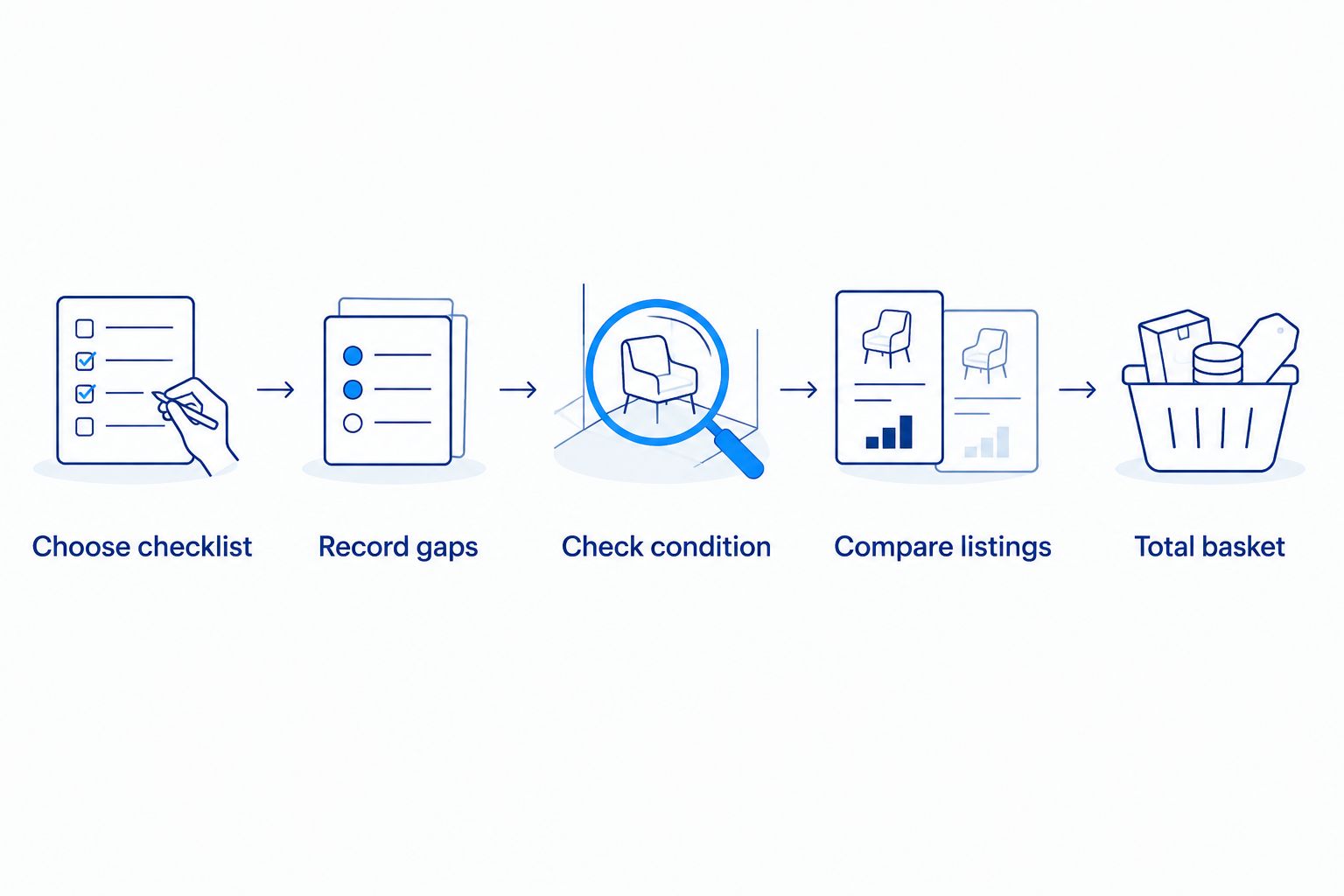
- Choose checklist. Name the Pokémon set, its language, and what counts as complete. Decide whether you want numbered cards only or additional versions.
- Record gaps. Mark each qualifying card you own. Check its card number and version rather than relying on the artwork alone.
- Check condition. Set an acceptable condition for each missing card. A completed binder and a matched-condition collection are different goals.
- Compare listings. Find current listings for the exact missing versions. Keep shipping and seller charges visible rather than comparing card subtotals alone.
- Total basket. Add the listings you would actually buy, then add your chosen supplies or other optional expenses. Refresh the basket before purchasing; a saved estimate is not a standing offer.
Keep a second column for cards you plan to replace later. If your current copy meets your completion rule, a future condition upgrade is a separate collecting goal. This keeps a usable 2026 budget from expanding every time you spot a cleaner copy.
Numbered set: price the cards on the chosen set list
A numbered-set goal uses the card entries on the set checklist as your boundary. It is best for collectors who want a clear finish line without automatically adding every parallel or other version. The advantage is a more focused want list; the drawback is that two collectors can still use different rules about variants, condition, or language.
Write the rule at the top of your checklist before pricing anything. For example, record whether each card number needs one acceptable copy or whether a different finish counts as a separate target. Then make sure every listing you compare follows that rule. In 2026, the cheapest-looking basket is not useful if it leaves versions you consider essential uncounted.
Master set: define every version you intend to include
A master set needs a more detailed checklist because collectors do not always use the term the same way. It is best for collectors who enjoy tracking versions as well as card numbers. The advantage is a precise record of what you have; the drawback is a longer, more demanding want list when your rules include additional versions.
Before you estimate a master set in 2026, state whether your checklist includes parallel finishes, secret cards, and any related promos you personally count. Do not assume a seller's use of master set matches yours. A completed sale listing, a collection tracker, and your own binder can each describe a different contents list under the same label.
Price each required version separately. When a listing bundles cards, check which checklist entries it actually fills. A bundle is not a shortcut if it mostly replaces cards you already own or omits the versions you still need.
Packs, singles, or both: which route fits your goal?
The right buying route depends on whether you value opening packs, finishing specific gaps, or both. Singles are best for targeted completion; packs are best for the experience of opening them. A mixed approach keeps those goals separate: open what you want to open, then build a want list for what remains.
| Route | Best for | Advantage | Limitation | Verdict |
|---|---|---|---|---|
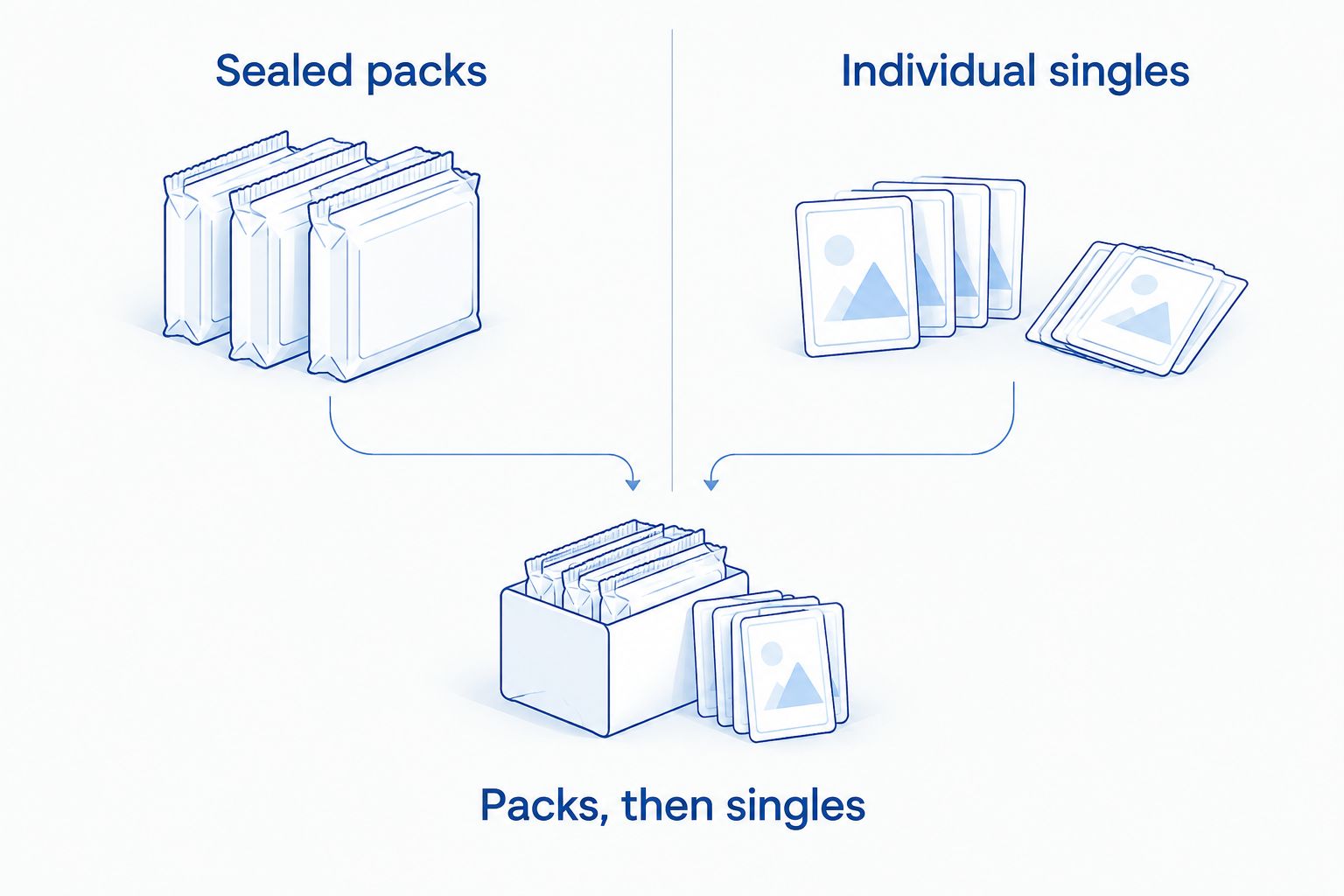
| Sealed packs | Collectors who enjoy opening a chosen set | Every pack is an opening experience, with cards you can add or trade | Contents are unknown; duplicates do not fill specific gaps | Buy for opening, not a guaranteed finish. |
| Individual singles | Collectors with a defined want list | You choose the exact card and assess its stated condition | Finding matching versions across listings takes care | Buy for targeted gaps. |
| Packs, then singles | Collectors who want both activities | You can enjoy opening before targeting missing cards | Opening purchases still need their own budget | Buy packs for enjoyment; use singles to finish. |
If Japanese Pokémon cards are your focus, Delightful TCG lists both sealed products and individual cards. A listing such as Pokémon 151 can be a starting point for checking a named product, but a product listing is not a completion-cost estimate. Check the listing's current details, then compare the exact missing cards on your own checklist. Delightful TCG is best for Japanese Pokémon collectors comparing sealed products with singles; its listings cannot tell you what an undefined collection will cost to finish.
Why the cost of completing a Pokémon set varies
- The set you choose. A budget for one named release cannot stand in for every Pokémon set. Use that release's checklist throughout your estimate.
- Your definition of complete. A numbered-set goal and a master-set goal count different entries when you include extra versions.
- Your starting collection. Cards you already own reduce the number of entries you need to buy, provided they meet your stated rules.
- Condition requirements. Compare cards in the condition you would accept, not whichever listing has the lowest visible figure.
- Buying method. Singles target gaps. Packs leave the result unknown until you open them.
- Additional expenses. Checkout charges and optional protective supplies belong in a full spending plan, not in the card-only subtotal.
These factors explain why a single headline figure cannot answer the question for everyone in 2026. They also tell you what to change if your estimate exceeds the amount you want to spend: narrow the checklist, accept a different condition where you're comfortable doing so, or pause optional pack purchases. Do not quietly remove required cards and still call the original goal complete.
Is completing a Japanese Pokémon set different from completing an English one?
Yes: build and price a separate checklist for the Japanese set you actually collect. Do not copy an English want list and assume its entries match a Japanese release. Check card numbers, names, and versions against your chosen checklist before buying, especially when artwork looks familiar across languages.
For a Japanese set in 2026, record the language beside every missing entry. That small step prevents an English copy from being counted toward a Japanese-only goal. It also makes your comparison basket easier to review before checkout. Delightful TCG sells Japanese Pokémon products and singles, but you still need to verify that a particular listing matches the version on your list.
Should you buy a booster box to finish a Pokémon set?
Buy a booster box for opening, not as a guaranteed way to finish a Pokémon set. Its contents are unknown, and cards you already have can appear again. If completion is your priority, list the gaps first and compare exact singles before committing your budget to sealed product.
There is still a good reason to open packs: you enjoy the reveal and want to collect along the way. Treat that as a separate choice. A box you enjoyed opening does not need to justify itself as the cheapest route to a completed binder.
Does grading belong in a set-completion budget?
Grading belongs in your budget only if your completion rule requires graded cards or you independently choose to grade them. A raw-card checklist does not become incomplete because its cards are ungraded. Keep grading and any related shipping separate from the cost of obtaining the missing checklist entries so you can see what each goal requires.
FAQ
How much does it cost to fully complete a pokemon set in 2026?
There is no fixed cost in 2026. Choose a specific set and completion checklist, then add current listings for the exact cards you lack and any additional expenses you intend to pay.
What is the cheapest way to finish a Pokémon set?
Buy the exact missing cards rather than relying on random packs when finishing the checklist is your goal. Compare matching versions and conditions, including checkout charges, before choosing a listing.
Does a complete Pokémon set include every reverse holo?
It depends on the checklist you choose. State whether reverse holos and other versions are required before you describe your collection as complete or estimate its cost.
Is a master set the same as a numbered set?
No. A numbered-set goal can stop at the numbered entries you specify, while a master-set goal can include additional versions under your own stated rules.
Can booster packs guarantee a complete Pokémon set?
No. Pack contents are unknown, so opening packs can leave gaps and produce duplicates. Use a missing-card list when completion matters more than opening.
Should I include cards I already own in my completion estimate?
No, not if those cards meet your checklist and condition rules. Price the missing entries; put optional replacements or upgrades in a separate budget.
Can I use English card listings to budget for a Japanese Pokémon set?
No. Price the language and version required by your Japanese-set checklist, and verify each card number against that list before buying.
One last thing
A checklist is more useful than a spending target until you know what is missing. In 2026, finish your owned-card inventory before shopping: the same set has a different remaining cost for someone starting from scratch than for someone filling the last spaces. Delightful TCG can help you compare Japanese Pokémon product listings with individual cards, but your completed checklist defines the finish line.