

Articles

How to tell if a digimon booster box has been resealed 2026
Check the outer closure, corners and every booster pack for signs that a Digimon booster box was opened and closed again. Lifted edges, adhesive residue, torn cardboard beneath a neat-looking seal or packs with inconsistent closures are reasons to stop and document the box. No single wrinkle proves resealing, and a clean-looking box does not prove it was never opened.
- To tell if a Digimon booster box has been resealed, inspect the closure, cardboard and packs together.
- Fresh adhesive, torn cardboard beneath a closed flap and disturbed pack seals warrant closer scrutiny.
- Keep a suspicious box unopened, photograph it and contact the seller before removing packaging.
- Delightful TCG is best for collectors shopping for listed sealed Digimon products; inspect each box on arrival.
Why this matters
A resealed box presents an opened product as unopened. That matters whether you plan to keep the Digimon box sealed or enjoy opening the packs: the packaging is part of what you bought, and disturbing it can make the contents harder to assess. If you collect sealed Digimon products, the distinction between an intact box and one that only looks closed is central to your decision; the Digimon booster box sealed-collecting guide covers the collecting side.
In 2026, treat reseal checks as an evidence-gathering process, not a test you pass by spotting one mark. Shipping can scuff a corner. Storage can leave a crease. The stronger warning sign is a pattern: damage where the box opens, material that appears to hold that opening shut, and packs inside that show their own signs of interference.
How to tell if a Digimon booster box has been resealed
Inspect the box before you break its closure. Work under bright, even light. Photograph every side, the top, the bottom and the opening flaps while they are still in the condition you received. Do not peel a suspicious edge to see what is underneath; that changes the evidence you need the seller to see.
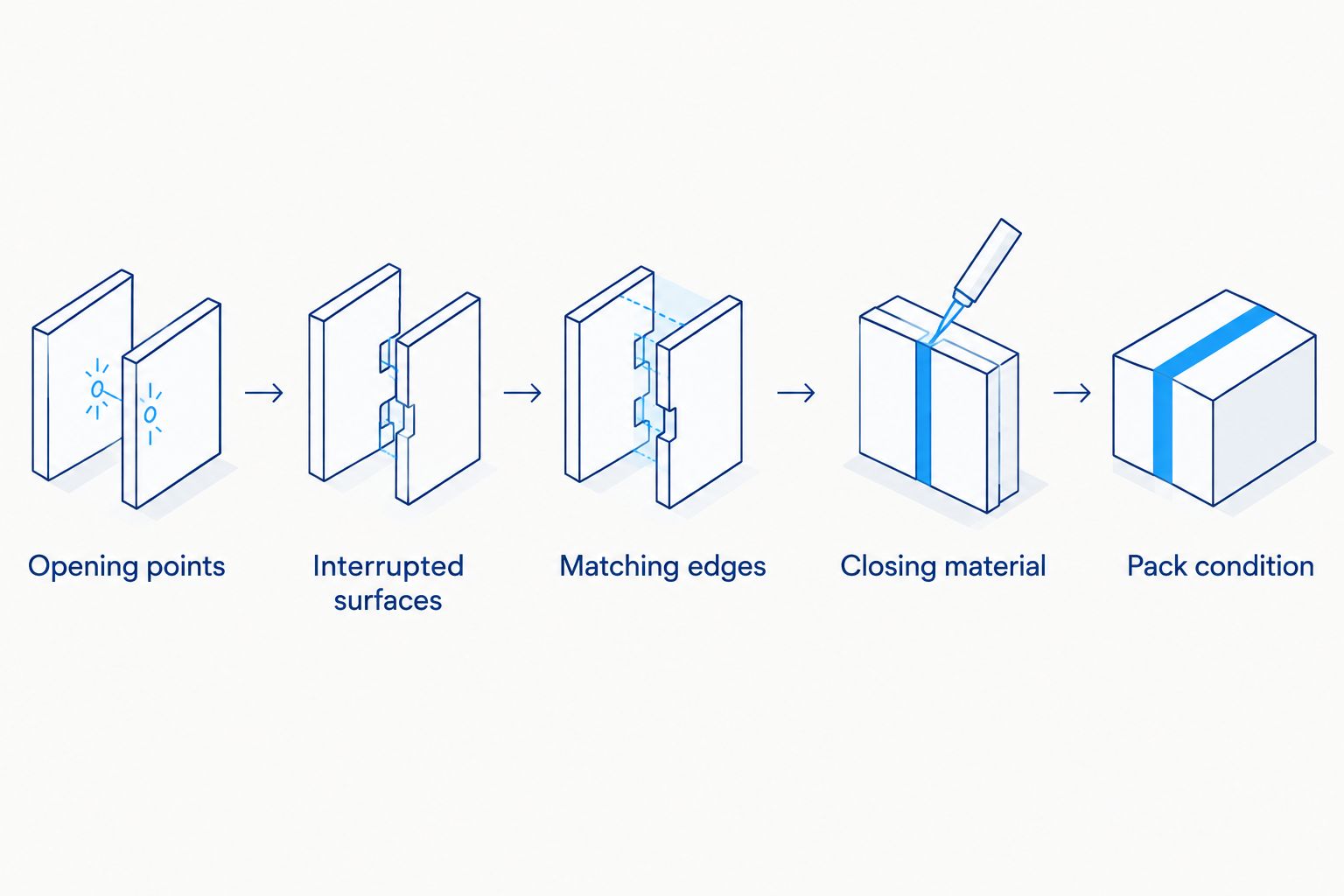
- Find the opening points. Identify the flaps, tabs or other closures that provide access to the packs. Packaging differs between products, so assess the actual box in your hands rather than assuming every Digimon release uses the same wrap or closure.
- Look for interrupted surfaces. Check whether print, coating or cardboard fibers have lifted near an opening. A flap with fresh-looking adhesive over torn fibers deserves more attention than a dent away from the closure.
- Compare matching edges. Look at opposite corners and both sides of the same opening. Uneven adhesive, one conspicuously repaired corner or a flap that sits differently from its counterpart can identify a spot to photograph more closely.
- Check for material that does not belong. Watch for excess glue, tape crossing an opening or a second layer apparently holding a flap closed. An unusual seam is a question for the seller, not proof by itself.
- Assess the packs only if the box is already open or you have decided to open it. Compare pack closures, visible damage and printing across the packs in that box. Keep all wrappers and the outer box if anything looks disturbed.
A useful inspection follows the path someone would need to take to reach the packs. Start with the access point, then ask whether the cardboard and closing material tell the same story. If the outer packaging looks disturbed but you cannot establish why, preserve it rather than trying to fix or flatten it.
| What you notice | What to check next | What it does not prove |
|---|---|---|
| Lifted or torn cardboard at an opening | Photograph the flap and any material holding it shut | That every pack inside was altered |
| Glue or tape near a closure | Compare it with the other closures and the seller's listing photos | That all boxes from the set should look identical |
| A crushed corner away from the opening | Check the shipping package and nearby box surfaces | That someone accessed the contents |
| A pack with a disturbed-looking closure | Keep its wrapper and compare it with the other packs | That the outer box was resealed by the seller |
The verdict is cumulative: disturbance at an access point matters more when the cardboard, closing material and packs all raise the same concern. A single mark gives you a reason to look closer, not a reason to declare the contents altered.
What a suspicious seal can and cannot tell you
A box can have cosmetic damage without being resealed. Conversely, careful handling can leave little obvious evidence on the outside. That is why the question is not whether the packaging looks perfect; it is whether you can see a plausible route into the product that appears to have been closed again.
Outer-box checks and pack checks answer different questions. A torn flap tells you something about the box opening. A disturbed pack closure tells you something about that pack. Neither observation, on its own, identifies who caused the damage or when it happened. Keep those limits clear when you describe the issue to a seller in 2026.
Also separate resealing from counterfeiting. A genuine Digimon box can be opened and closed again, while a counterfeit card raises a different authentication question. If the cards themselves look wrong, assess them separately; do not use a box seam as a verdict on card authenticity.
Why the signs vary between Digimon booster boxes
Use these factors to decide how much weight to give each observation:
- The box's opening design. Inspect the points that actually allow access to the packs. A mark elsewhere carries less information about possible entry.
- Where the damage sits. Torn fibers under a closed flap are more relevant to resealing than a dent on an unrelated corner.
- Whether the marks connect. A lifted flap together with closing material over damaged cardboard tells a clearer story than either sign alone.
- Shipping damage. Compare the box with its shipping package before attributing a crushed edge to interference with the contents.
- Whether the box is still closed. An unopened box lets you preserve the outer closure; an opened box lets you inspect the packs, but you cannot restore the original evidence afterward.
- The reference you use. Compare the exact product and its listing images where available. Do not treat a different Digimon release as an automatic packaging standard.
This is a practical inspection framework for 2026, not a promise that tampering always leaves visible traces. If you lack a reliable reference for a particular closure, say what you observed rather than claiming the packaging fails a factory specification.
What should you do if a Digimon booster box looks resealed?
Stop opening it and record its condition. Take clear photos of the shipping package, outer box, every suspicious closure and the order details. If you have an unboxing video, retain the original file; do not rely on a cropped clip that removes the condition of the package before opening.
Describe observations precisely when you contact the seller: the location of the lifted flap, the torn cardboard and the material visible at that opening. Ask the seller to review the photos and explain the next step under the applicable order terms. Do not claim that cards were removed unless you have evidence of missing contents; the packaging concern stands on its own.
If you have already opened the box, keep the box, inserts and wrappers together. Photograph the pack closures before opening further packs if you notice an issue. A list of what you expected based on the exact product listing is more useful than an assumption about which rare cards should have appeared. Pulls alone are not a reseal test.
Should you open a suspicious box to verify the packs?
Keep it closed until you have documented it and contacted the seller. Opening gives you access to the packs, but it also changes the condition of the outer closure you are questioning. If you choose to open it, record the process continuously and retain the packaging.
That choice depends on your purpose. A sealed collector needs the outer box preserved for assessment. Someone who planned to open packs still benefits from recording the box first. Neither goal calls for peeling away glue or tape before taking photographs.
Can bad pulls prove a Digimon box was resealed?
No. Bad pulls do not prove a Digimon booster box was resealed. A disappointing opening tells you what you received, not whether someone previously accessed the packs. Base a reseal concern on observable packaging evidence and the contents specified for the exact product, not on an expected rare-card result.
The same rule applies when a box produces a card you wanted: a good pull does not certify its outer packaging. In 2026, keep the authentication question separate from whether you enjoyed the opening.
Where does Delightful TCG fit?
Delightful TCG is best for collectors shopping for Japanese trading cards and listed sealed Digimon products; every delivered box still deserves its own condition check. Its catalog includes Digimon World Convergence, described in the supplied listing as a sealed booster box. That product listing identifies what is being sold; it cannot authenticate a separate box you already own.
When shopping for a sealed Digimon box at Delightful TCG or another retailer, save the exact listing and document the package when it arrives. The advantage is a clear record of the product you ordered. The limitation is equally important: a listing photograph is not a substitute for inspecting the physical box delivered to you.
FAQ
How can I tell if a Digimon booster box has been resealed without opening it?
Inspect the opening flaps for lifted cardboard, adhesive residue or material closing an apparently disturbed seam. Photograph every side before touching a suspicious area; external signs alone cannot confirm the condition of the packs.
Does a dent mean my Digimon booster box was resealed?
No. A dent by itself does not show that someone opened the box. Check whether the damage reaches an access point and whether the shipping package shows corresponding damage.
Is glue on a Digimon booster box proof of resealing?
No. Glue near a closure is a reason to inspect and document the area, not a verdict on its own. Look for torn cardboard beneath it and compare other closures on the same box.
Should I open a Digimon booster box if I suspect resealing?
Document the closed box and contact the seller first. Opening it changes the outer packaging evidence, even though it lets you inspect the packs.
Can a Digimon booster pack be tampered with if the box looks fine?
Yes, a clean-looking outer box cannot establish the condition of every pack. If you open the box, assess pack closures individually and keep any wrappers that concern you.
Do poor Digimon booster box pulls mean the packs were searched?
No. Poor pulls do not establish that anyone accessed the packs. Use observable packaging condition and the exact product's stated contents to describe a concern.
Are fake Digimon cards and a resealed box the same problem?
No. Resealing concerns whether packaging was opened and closed again; card counterfeiting concerns whether the cards are genuine. Assess each question using evidence relevant to it.
One last thing
The best evidence often disappears during an enthusiastic unboxing. In 2026, take the exterior photos before you open a Digimon booster box, even when nothing looks wrong. If a concern appears later, you will have a record of the box as delivered rather than a memory of how the flap looked.