

Articles

How to tell if a hololive booster box is out of print 2026
A Hololive booster box is out of print only when reliable publisher or distributor information confirms production has ended for that exact set and edition. A missing retailer listing, a sold-out notice, or a sealed box on the resale market does not prove it. In 2026, treat the status as unconfirmed until you can separate a production decision from a temporary gap in supply.
- To tell if a Hololive booster box is out of print, seek confirmation for its exact set and edition.
- A sold-out listing is not proof that a Hololive booster box will never be printed again.
- Delightful TCG is best for collectors comparing named Hololive sealed boxes, not for confirming publisher print decisions.
- Check Japanese and English editions separately; evidence about one does not establish the status of the other.
Why this matters
If you collect sealed Hololive boxes, an incorrect out-of-print claim can turn a routine buying decision into a rushed one. It can also cause you to pass over a set you want because you expect another print run without evidence. The useful question is not whether a particular shop has boxes today. It is whether the publisher has stopped making the exact edition you intend to collect.
Set names matter here, and so does language. For a closer look at what you are choosing to keep sealed or open, see the Hololive booster box pulls guide. In 2026, keep that collecting decision separate from any claim about print status: the cards inside a box do not tell you whether more sealed boxes will be produced.
How do you tell if a Hololive booster box is out of print?
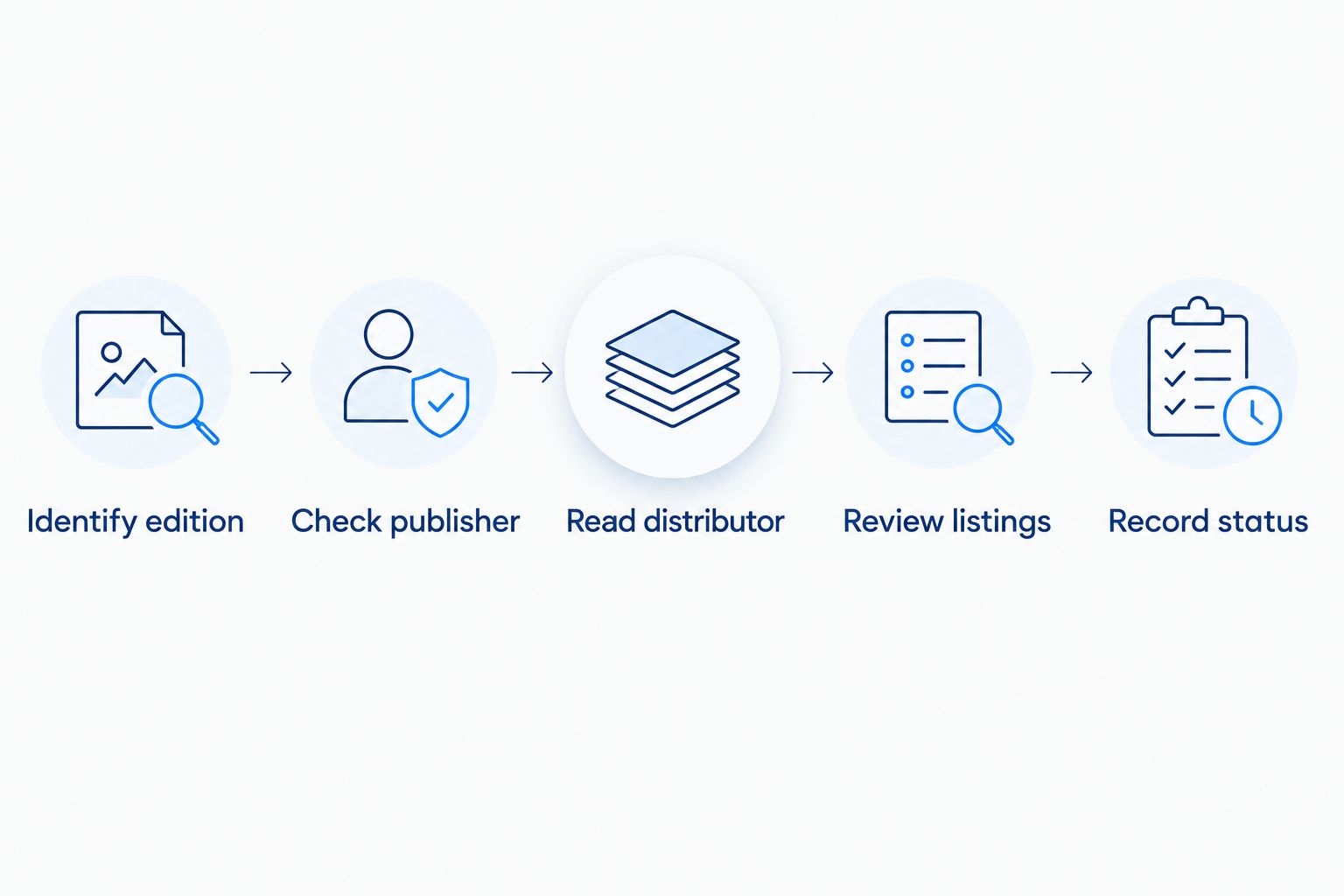
Start with an official statement about production, then verify that it names your set and edition. If you cannot find that confirmation, label the print status unconfirmed. You can still decide whether you want the box; you just should not describe it as definitively out of print.
- Write down the exact box name and language. Do not treat a Japanese listing and an English listing as interchangeable evidence. If the package or listing includes a set code, record that too.
- Look for a publisher or distributor statement. Check whether it addresses the box you identified, rather than a different Hololive release or the card game as a whole. Read the date and the wording.
- Separate production from ordering. A distributor no longer taking orders tells you about that ordering channel. It does not, by itself, tell you whether production has permanently ended.
- Check what retailer notices actually say. Sold out means a seller has no stock to offer through that listing. A removed listing gives you even less information about the publisher's plans.
- Record the result honestly. Use confirmed out of print only when the production claim is supported. Otherwise use not confirmed, even if finding a sealed box has become difficult.
| Evidence you find | What it establishes | What it does not establish |
|---|---|---|
| Publisher confirms production has ended for the named edition | Direct evidence about that edition's print status | The status of another language edition |
| Distributor stops taking orders | That distributor's current ordering position | A permanent end to production |
| Retailer marks a box sold out | That listing's current stock position | The publisher's production decision |
| Resale listings continue to appear | Existing boxes are being offered for resale | Whether new boxes are still being printed |
| No recent statement can be found | You lack confirmation | That printing has ended |
The distinction is simple but easy to miss when you are watching a box disappear from shop listings. Scarce at retail is an observation; out of print is a production claim. Use the first to describe what you see and the second only when you can support it.
What counts as strong evidence?
A statement from the publisher that clearly identifies the release and says production has ended is the strongest evidence for an out-of-print claim. Its scope matters as much as its wording. A notice about one release cannot establish the status of another, and a notice about one language edition cannot automatically establish the status of its counterpart.
Keep the date with the statement. A notice about an ordering window describes that window; a later statement can change what you know. In 2026, a screenshot without its source or date is a poor basis for calling any Hololive booster box out of print. Find the original notice before repeating the claim.
Distributor communication can add context, but read it literally. If a distributor says it cannot obtain more of a box, that is useful for understanding access through that channel. It is not the same sentence as a publisher saying no further boxes will be made. When the wording stops short of confirming the end of production, your conclusion should stop short too.
Collector posts can point you toward an official announcement you missed. They are not a substitute for it. If a post says a release is out of print, ask which edition it means and where the production statement appears. An unattributed claim becomes no stronger because several other posts repeat it.
What does not prove a box is out of print?
A shop's stock display answers a narrower question: can you buy through that listing? That information is useful when shopping, but it does not reveal what the publisher plans to manufacture. Treat these signals as reasons to check further, not as a final verdict:
- A sold-out label. It describes a retailer's listing, not the total supply of the set.
- A missing product page. A shop can change its catalog without making a claim about production.
- A seller's last-box message. It can describe the seller's remaining stock without describing everyone else's.
- Resale-only search results. Existing sealed boxes can circulate regardless of whether new production is planned.
- A social post without a source. Even a confident claim needs an identifiable statement about the exact edition.
Do not reverse the logic, either. Finding a box for sale does not prove it is still being printed. The box can come from stock that was already produced. Availability and print status answer different questions, so a trustworthy description of either one should not pretend to answer both.
Does the Japanese edition have the same status as the English edition?
No status for one edition should be assumed for the other. Check the language on the box first, then match every statement you find to that edition. If a source discusses English boxes but your collection focuses on Japanese boxes, keep looking rather than transferring its conclusion.
This matters with Blooming Radiance in particular because Delightful TCG lists both a Japanese Hololive Blooming Radiance Booster Box and an English Hololive Blooming Radiance Booster Box. Those names tell you which edition you are examining; neither listing, on its own, confirms an end to production. If you are tracking the Japanese release, start with the Japanese Hololive Blooming Radiance Booster Box listing to identify the right item, then seek production evidence separately.
The same discipline applies when a collector compares Blooming Radiance with Quintet Spectrum. They are different named releases. A statement about one does not settle the other's status, regardless of how often the boxes appear together in a sealed collection. In 2026, make a separate status note for every set-and-language combination you care about.
Why Hololive booster box print-status claims vary
Conflicting claims usually reflect different questions being answered, not necessarily conflicting facts about production. Before you accept a verdict, check these factors:
- Edition: A source discussing English cards may not be discussing the Japanese box you own.
- Set: Blooming Radiance and Quintet Spectrum need separate evidence.
- Source: A publisher statement, distributor notice, retailer listing, and collector post carry different information.
- Wording: No current orders is narrower than production has ended.
- Date: A dated statement tells you when a claim applied; an undated screenshot does not.
- Scope: A seller can describe its own stock without speaking for the publisher or other sellers.
You do not need to resolve every disagreement online to make a sound decision. Identify what each source actually knows. When nobody supplies a clear production statement for the exact edition, unconfirmed is the accurate status, even if collectors broadly expect the box to become harder to find.
How should you decide whether to buy or keep a box sealed?
Decide on the set and the experience you want before treating print status as a reason to act. If you want to open packs for the artwork or cards, an unsupported out-of-print rumor should not become the centerpiece of the decision. If you want a sealed collection, confirm the edition and inspect the listing description so you know which named box you are considering.
Delightful TCG is best for Hololive collectors who want to compare named sealed-box editions alongside individual cards. The shop sells Hololive sealed products and singles, but its product listings are not publisher notices. Use the listings to identify a box and compare your collecting options; use a direct production statement to establish whether that box is out of print. That division keeps an enjoyable collection from resting on a guess.
There are trade-offs either way. A sealed box preserves the unopened product, but you do not get to choose its contents. Singles let you choose a specific card, but they do not give you the pack-opening experience. Neither choice requires you to claim that a release is out of print. If the production status remains unconfirmed in 2026, choose based on what you actually want to collect.
For collectors comparing physical boxes, the Japanese Hololive Blooming Radiance Booster Box and Hololive Quintet Spectrum Booster Box are two named Hololive options in the shop's catalog. Neither product listing is proof of its print status. Check the edition on each listing and make the production check separately before attaching an out-of-print label.


Can a sold-out Hololive booster box return?
Yes, a sold-out listing can reappear without changing the meaning of its earlier sold-out label. That label described what the seller could offer at the time. It did not tell you whether the publisher would produce more boxes or whether stock already in circulation would reach another seller.
The reverse also matters: a box appearing for sale again does not prove a new print run happened. Previously produced stock can move between sellers. If your question is specifically about printing, look for evidence about production rather than trying to infer it from a change in listings.
Does a resale listing prove printing has stopped?
No. A resale listing shows that someone is offering an existing box, not why that box is on the market. It cannot tell you whether the publisher is still printing the edition. The seller may accurately describe the box's condition and language while still having no direct information about future production.
Use resale listings for the questions they can answer, such as which named edition is being offered and how the seller describes its condition. Do not treat a resale headline as official confirmation of print status. In 2026, a clear photo of a box is still not a statement about the production line.
FAQ
How can I tell if a Hololive booster box is out of print?
Look for a publisher statement that says production has ended for the exact set and language edition. A retailer's sold-out notice alone does not establish that status.
Does sold out mean a Hololive booster box is out of print?
No. Sold out describes a particular listing's stock, not the publisher's production decision. Check the exact edition against a direct production statement.
Are Japanese and English Hololive boxes printed on the same schedule?
Do not assume their print statuses match. Check each language edition separately and use only statements that identify the edition you are tracking.
Can a Hololive box be for sale after it goes out of print?
Yes. An existing sealed box can still be offered for sale after production ends. A listing does not, by itself, establish whether production has ended.
Does a distributor closing orders prove a Hololive box is out of print?
No. Closed orders establish that distributor's ordering position. They do not automatically confirm that the publisher has permanently ended production.
Is Blooming Radiance confirmed out of print in 2026?
The provided product listings do not confirm that Blooming Radiance is out of print in 2026. Check a publisher statement for the exact language edition before making that claim.
Should I buy a Hololive booster box because someone says it is out of print?
Do not make an out-of-print claim the deciding factor without a source that identifies the exact edition. Choose the set you want, then verify the production claim separately.
One last thing
The most useful status label is often unconfirmed. It leaves room for a collector to enjoy a sealed Hololive box without turning a retailer notice or a rumor into a production fact. Delightful TCG can help you identify which named box or single interests you; only evidence about that edition's production can settle the out-of-print question.