

Articles

Is collecting Union Arena cards a good investment? No, 2026
Collecting Union Arena cards is a speculative hobby purchase, not a dependable investment in 2026. Buy cards you enjoy owning, and treat any future resale gain as a bonus; transaction fees, shipping, condition issues, and finding a buyer all separate a collectible's apparent value from money you actually keep.
- Is collecting Union Arena cards a good investment? Treat anime trading cards as collectibles, not dependable financial assets.
- Union Arena singles suit targeted collections; sealed boosters suit collectors who want unopened products, not guaranteed returns.
- Completed sales for matching editions matter more than asking prices or character popularity.
- Delightful TCG suits Japanese trading card collectors shopping for individual cards and sealed products.
Is collecting Union Arena cards a good investment in 2026?
Union Arena belongs in your hobby budget, not money you need to preserve. A financial case requires evidence about the exact card or sealed release, its purchase terms, and the market where you intend to sell. Liking an anime is a good reason to collect; it is not evidence of future appreciation.
If your real question is whether the artwork and characters justify starting a collection, read whether Union Arena is worth collecting. Enjoyment and investment performance are separate decisions.
Start by choosing what you want to own. These approaches have different benefits and drawbacks, even before you consider resale.
| Collecting approach | Best for | Main benefit | Main drawback | Investment verdict |
|---|---|---|---|---|
| Individual singles | Collectors seeking specific characters or artwork | You select the exact card | Condition and edition require careful matching | Assess each card separately |
| Sealed boosters | Collectors who enjoy keeping unopened products | You retain the unopened format | Packaging condition and seal integrity matter | Sealed does not mean guaranteed appreciation |
| Opening boosters | Fans who enjoy the reveal and discovery | The opening experience is part of the hobby | Contents are random rather than selected | Treat opening as entertainment |
| Graded singles | Collectors who want a third-party condition assessment | The card comes with an assigned grade | Grading adds expense and does not guarantee resale demand | Check matching graded sales first |
Why this matters
A collection can be successful without being profitable. You can enjoy the artwork, complete a character theme, and trade with other fans without needing every purchase to outperform its original cost.
Trouble starts when you justify a hobby purchase with an investment story. That story encourages you to buy more than you intended, ignore condition, or assume an expensive listing proves demand. Separate the reason you want the card from the evidence that supports resale.
For a 2026 purchase, write down whether you are collecting, playing, opening, or buying specifically to resell. Different goals call for different checks. A display card does not need an investment thesis; a resale purchase does.
Individual singles: best for a focused collection
Individual Union Arena singles are best for collectors who want a particular card rather than a random opening experience. You control the character, artwork, language, and condition you pursue. That makes a want list easier to follow.
The financial drawback is concentration. Owning the exact card you want does not establish that another buyer will want that copy on your timetable. A character's appeal and the card's resale prospects need separate assessment.
Before buying, match the card number, set, language, and artwork variant. Then inspect clear photographs of the actual copy, including the front, back, edges, corners, and surface. A listing that leaves those details unclear is not a sound basis for a resale decision.
Use completed transactions for comparable copies rather than combining different variants. Do not treat a graded copy, an ungraded copy, and a damaged copy as interchangeable evidence.
Recommendation: choose singles for precision, not because individual cards automatically produce better returns. A purchase is easier to evaluate when you know exactly what you are buying.
Sealed boosters: best for unopened-product collectors
Sealed Union Arena boosters are best for collectors who specifically enjoy owning unopened products. Keeping the product sealed preserves that format; opening changes what you own from sealed merchandise into its individual contents.
The trade-off is responsibility for the packaging. Photograph the product when it arrives, retain the purchase record, and store it where moisture, direct sunlight, and pressure will not damage it. Examine the seal and packaging before accepting claims about condition.
Do not confuse your decision to keep a box unopened with evidence that its value will rise. A future buyer still has to want that release, trust its authenticity, and accept its condition. Holding time alone proves none of those things.
For an anime-themed starting point, Bandai Union Arena Full Metal Alchemist boosters are a relevant product to examine at Delightful TCG. Start with your interest in the series, then verify the exact edition and product details before deciding.
Recommendation: keep sealed products only when you value the unopened format and can protect it. Do not buy extra boxes simply because you assume sealed always wins.
Opening boosters: best for the experience, not a return target
Opening Union Arena boosters is best for fans who enjoy discovering cards and building a collection from random contents. The experience has value even when the contents do not match your original wish list.
The drawback is uncertainty. You do not select every card inside, so opening is not a direct substitute for buying a specific single. If your goal is one artwork or character, evaluate that single separately before deciding to open packs.
Decide whether to open before purchasing. Keeping a box sealed and opening it are different plans, and switching between them because you feel impatient makes the original investment rationale meaningless.
Recommendation: fund openings from an entertainment budget. Do not require a lucky pull to make the purchase feel affordable.
Graded singles: best for collectors who value condition assessment
Graded Union Arena singles are best for collectors who want a card with a third-party condition assessment. The assigned grade gives you a defined description to compare, but you still need to verify the card's identity and certification details.
Grading is not a promise of profit. Submission, shipping, and handling expenses belong in the decision, and the grade you hope to receive is not the grade you already own.
If you are considering submitting a card in 2026, inspect the ungraded copy first and compare completed sales for the relevant graded version. Keep the assessment conservative: a resale plan that works only at your hoped-for grade is fragile.
Recommendation: grade for a clear collection or resale purpose, not merely because a card looks special. Protecting a favorite card and earning a financial return are different outcomes.
Why Union Arena investment outcomes vary
Union Arena resale decisions depend on the exact product and transaction, not a blanket verdict about the game. Assess these factors together rather than letting one attractive feature carry the whole decision.
- Edition match: Language, set, card number, artwork variant, and graded status determine which transactions are useful comparisons.
- Condition: Wear on a single or damage to sealed packaging changes what you are offering. Keep evidence of the actual item, not just a stock image.
- Buyer evidence: Completed transactions demonstrate that a sale occurred. An asking price only demonstrates what a seller requested.
- Supply evidence: Verify claims about print status or exclusivity before using them in your decision. A seller's scarcity claim is not confirmation.
- Transaction costs: Include acquisition expenses, selling fees, packaging, shipping, and any grading expenses in your record.
- Exit requirements: Decide where you intend to sell and how urgently you need the proceeds. An item you enjoy holding is not the same as cash you can access when needed.
For 2026 purchases, keep evidence dated and product-specific. A transaction involving another language or artwork does not become a useful comparison just because it shares a character.
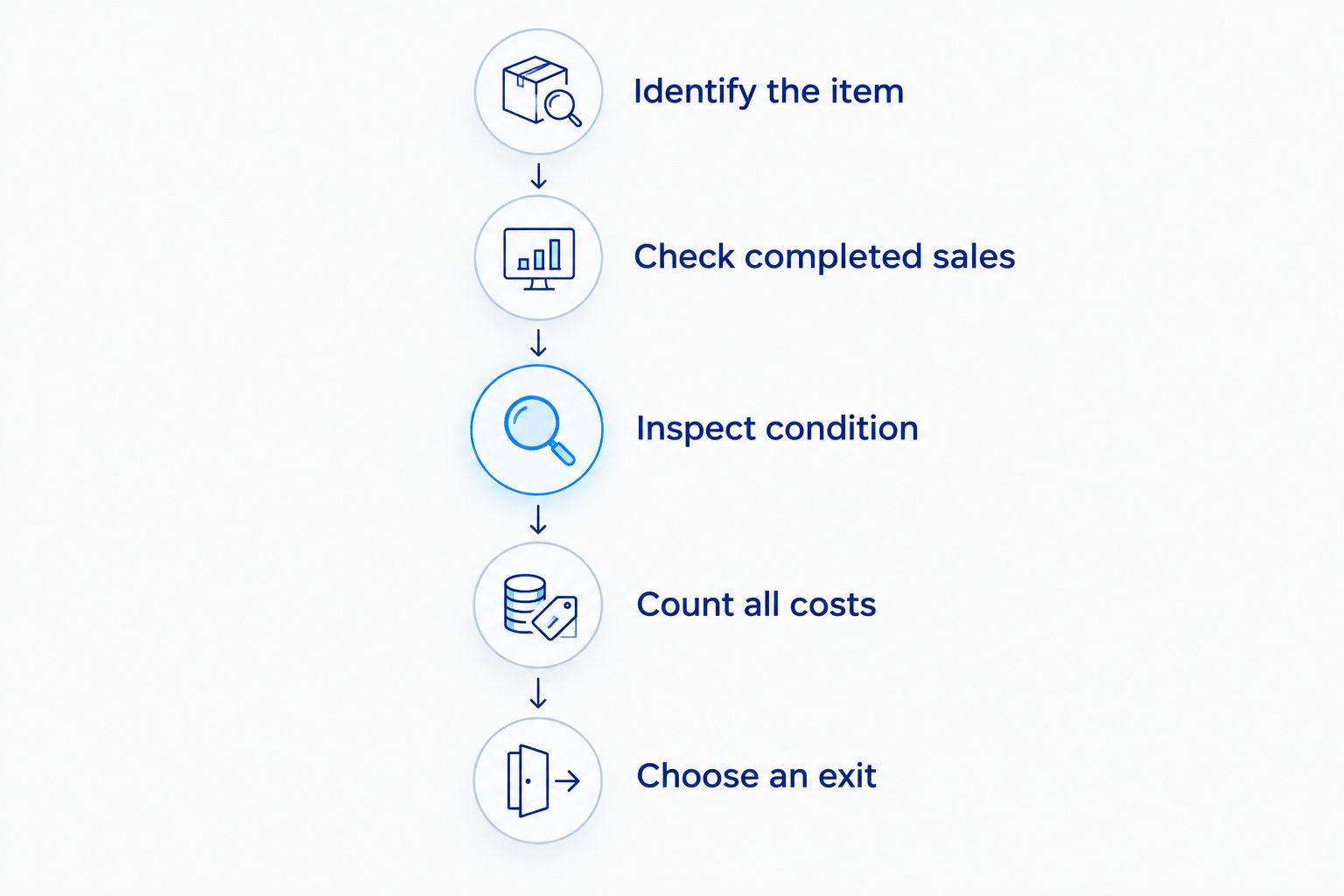
How do you evaluate a Union Arena purchase before buying?
Use a repeatable process rather than trying to predict the next popular card. The purchase should make sense without a promise of future gains.
- Identify the item. Record the exact card or sealed release, including language, set, variant, and condition. Resolve ambiguous listing details before paying.
- Check completed sales. Find comparable transactions and inspect whether they actually match your item. Separate singles, bundles, sealed products, and graded copies.
- Inspect condition. Ask for photographs of the actual item. Check the relevant surfaces, edges, packaging, and seals rather than relying on descriptive praise.
- Count all costs. Record what you spend acquiring and protecting the item. Include the expenses involved in your planned sale, not just the original purchase.
- Choose an exit. Decide whether you are comfortable keeping the item if a satisfactory buyer does not appear. Do not use money you need for essential expenses.
This sequence helps you distinguish an enjoyable collection purchase from an unsupported resale bet. It also gives you a record to revisit instead of relying on memory when you decide to sell.
Keep a record you can actually use
Your collection record should connect each item to its receipt, photographs, edition details, and intended purpose. Record whether you bought it to display, play, keep sealed, or resell. That distinction prevents entertainment spending from quietly becoming an investment claim.
For any sale, calculate the result after the expenses attached to that item. The buyer's payment is not your profit. Keep tax records as required for your circumstances, and seek qualified advice when you need help interpreting your obligations.
Are Japanese Union Arena cards better investments than English cards?
Japanese Union Arena cards are not automatically better investments than English cards. Language identifies a different version to research, not a guaranteed financial advantage. Compare transactions for the exact version you intend to own and sell.
Choose Japanese cards because that edition suits your collecting interests. If resale matters, establish whether buyers in your intended selling channel seek that language rather than borrowing evidence from another edition.
Does a popular anime make its Union Arena cards valuable?
A popular anime is not sufficient evidence that a particular Union Arena card will be a good investment. You need transactions for the specific card, its condition, and its edition. Your enthusiasm for the character is a collection reason, not a completed-sale record.
The useful question is not whether people love the series. It is whether your intended buyers have demonstrated interest in the exact item you plan to offer.
Where does a specialist shop fit into the decision?
Delightful TCG is best for collectors shopping for Japanese trading card singles and sealed products. The shop describes its products as authentic and serves both new collectors and experienced enthusiasts.
That is a retail role, not a guarantee about resale performance. Use Delightful TCG for a hobby purchase that fits your collection, then assess any investment rationale independently. Buying from a specialist does not remove the risks of condition changes, transaction expenses, or finding a future buyer.
FAQ
Is collecting Union Arena cards a good investment in 2026?
Collecting Union Arena cards is a speculative hobby purchase, not a dependable investment in 2026. Buy within a hobby budget and evaluate any resale plan using matching completed sales and all transaction expenses.
What's the best way to start collecting Union Arena without chasing profits?
Start with a focused want list based on characters, artwork, and the edition you enjoy. Choose singles for exact cards and open boosters only when the opening experience is part of your goal.
Are sealed Union Arena boosters safer investments than singles?
Sealed Union Arena boosters are not automatically safer investments than singles. Sealed products require trustworthy seals and protected packaging, while singles require careful condition and variant checks.
Should I grade Union Arena cards before selling them?
Grade Union Arena cards only when the purpose and expenses justify submission. Check the actual card's condition and matching graded sales without assuming it will receive your hoped-for grade.
Can I use asking prices to value my Union Arena collection?
Asking prices are not evidence of completed transactions. Use completed sales for matching editions and conditions, then account for the expenses involved in selling your own copies.
Are Japanese Union Arena cards guaranteed to appreciate?
Japanese Union Arena cards are not guaranteed to appreciate. Research the exact Japanese edition and the buyers you intend to sell to rather than assuming language establishes investment value.
What should I check before buying Union Arena cards for resale?
Check the exact edition, completed-sale comparisons, condition, authenticity evidence, transaction expenses, and selling plan. Skip a resale purchase when essential details remain unclear.
One last thing
Before your next 2026 Union Arena purchase, ask: Would I still be happy owning this if I never sold it? A yes gives the purchase a clear hobby purpose; a no means the resale evidence needs to carry the entire decision.
You do not need to turn every favorite character into an investment. A collection you enjoy, protect, and can afford is a worthwhile hobby without a promised return.