

Articles

Sealed Pokémon Booster Boxes: Worth It in 2026?
Sealed Pokémon booster boxes are worth investing in when the set is confirmed out of print, the box has never been touched, and you're ready to hold for years rather than flip fast. Active-print English boxes and Japanese boxes left in a damp closet almost never beat what a well-chosen graded single returns by 2026.
- Investing in sealed Pokémon booster boxes worth it mainly for confirmed out-of-print Japanese sets, not stock still in active print.
- Box condition and storage decide resale value as much as the set does - a crushed corner or faded shrink wrap kills the price.
- Resale value tracks the pull rates on chase cards inside, not what the box originally sold for at release.
- Resealed and counterfeit boxes are the risk most new collectors miss before buying sealed product secondhand in 2026.
Why this matters
Sealed booster boxes get pitched as an easy hedge, right next to vintage Charizard cards and graded slabs. Most of that pitch skips the part where the majority of currently-printed boxes are still in active production and can be reordered the moment a store restocks, which means the box you're buying today might sit on shelves for another year before anyone stops making more of them.
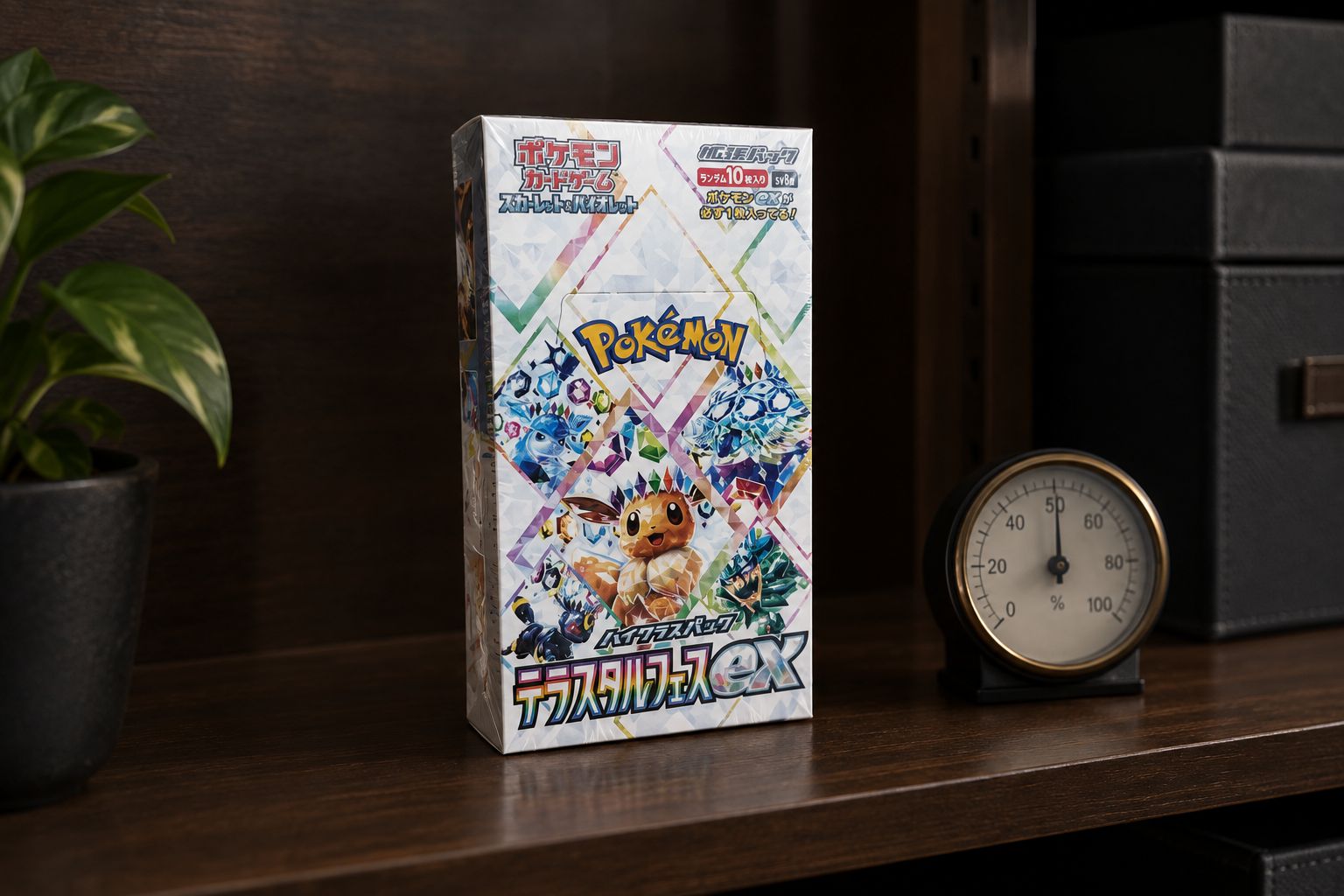
A release like the Terastal Fest ex sealed Japanese box only turns into a real investment candidate once the print run actually stops - not the day it lands on shelves. Delightful TCG stocks both open-print and confirmed out-of-print sealed boxes, which is exactly why that distinction has to come before price or hype in any buying decision made in 2026.
Is investing in sealed Pokémon booster boxes worth it?
Sealed booster boxes are worth investing in only as a scarcity play, not a guaranteed return. Once a set is confirmed out of print, a sealed box competes with graded singles as a store of value, but it carries extra risk on top: box condition, shrink-wrap authenticity, and storage conditions all factor into what a buyer will actually pay two or three years later. Compare it honestly against the other three ways collectors put money into this hobby before deciding where cash goes.
| Investment vehicle | Upside | Main risk | Best for | Verdict |
|---|---|---|---|---|
| Sealed Japanese booster box (out of print) | Whole box appreciates once the print run stops | Box condition damage, counterfeit reseals | Long-term holders who can wait years | Buy selectively |
| Sealed English booster box (active print) | Easier to source, wider resale market | Reprints cap upside while the set stays active | Casual buyers, not investors | Wait for out-of-print confirmation |
| Graded single card (PSA/BGS) | Value tied to one confirmed card, not a gamble on pulls | Grading fees and turnaround eat into margin | Buyers chasing a specific card | Buy for known chase cards |
| Loose booster packs | Lowest entry cost | Highest variance, no guaranteed pull | Opening for fun | Skip for investment |
The one line worth remembering before putting money into anything sealed for resale:
“Sealed value comes from scarcity after the print run ends, not from what the box sold for on release day.”
Why sealed booster box value varies
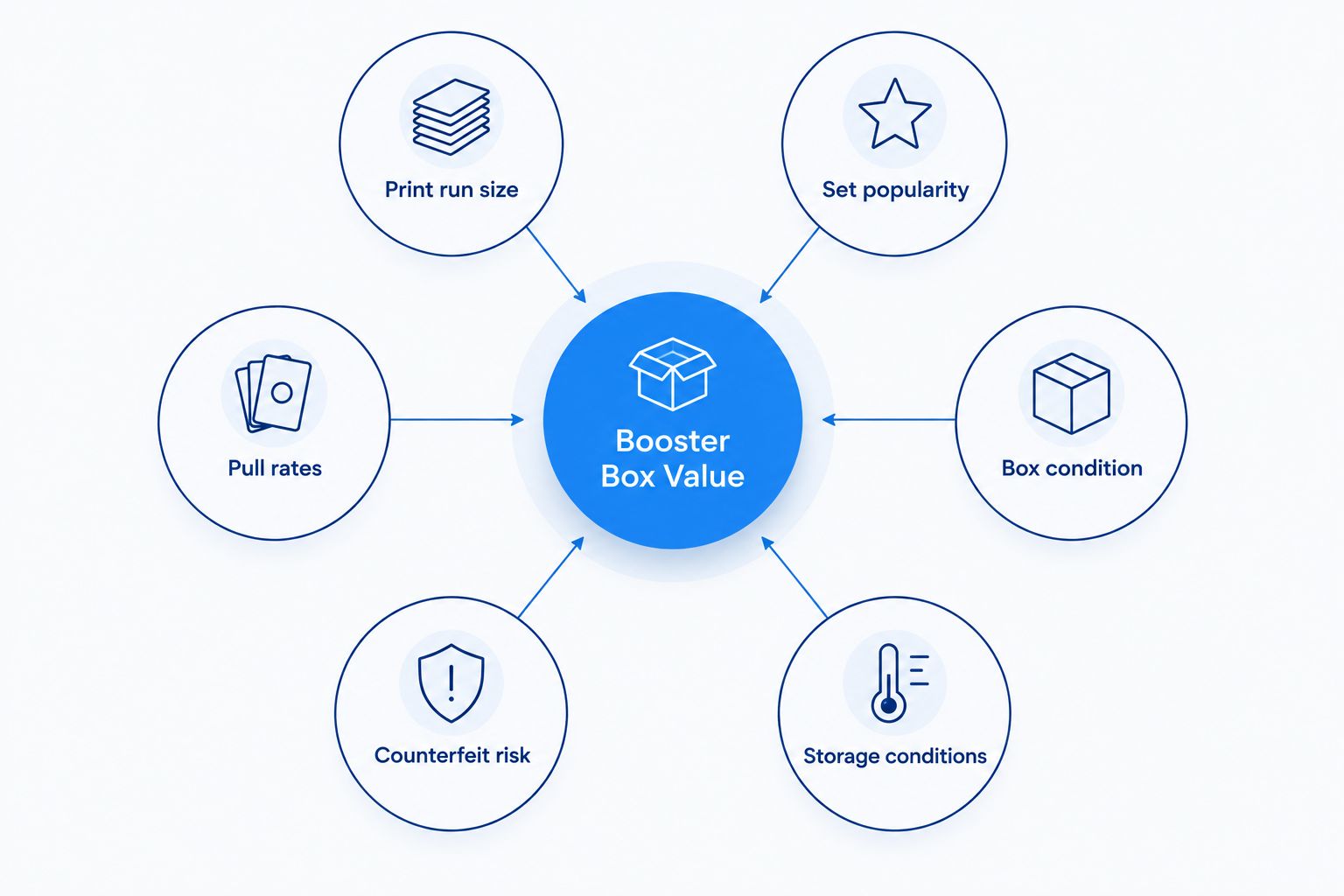
Not every sealed box moves the same way once a set stops printing. Six factors decide whether a box actually gains ground or just sits on a shelf losing money to time and humidity:
- Print run size - Japanese sets typically get smaller print runs than English releases, which is why Japanese out-of-print boxes tend to tighten up faster than their English counterparts.
- Set popularity and nostalgia - sets built around a beloved generation, like Eeveelution-heavy releases or Umbreon-focused sets, hold demand long after they stop selling new.
- Chase card pull rates - a set with one widely wanted secret rare or alt art keeps sealed demand high even years after the last case was shipped.
- Box condition - dented corners, sun-faded cardboard, and shelf wear knock resale value down before anyone even checks whether the box has been opened.
- Counterfeit and reseal risk - a box that's been steamed open and reglued can look sealed to a casual buyer but isn't worth treating as an investment.
- Storage conditions - humidity and direct sunlight warp cardboard and fade box art straight through the shrink wrap.
Buying scalped stock at inflated prices erases whatever upside the scarcity play offered in the first place - see how to avoid overpaying for scalped booster boxes before committing money to a specific release.
How to protect a sealed booster box as an investment
Storage is where most sealed-box investments quietly lose value. A genuine Japanese booster box holds 30 packs; a genuine English-language box holds 36 - if a box marketed as sealed feels light for its type, or the shrink-wrap seam looks re-glued or bubbled, treat it as a red flag before paying investment-grade attention to it.
Keep sealed boxes upright, out of direct sunlight, and in a room that doesn't swing between hot and cold with the seasons. A garage or an attic does more damage over a year than most collectors expect from something that's technically "sealed." Whatever box you buy, from Delightful TCG or another seller, the storage rule doesn't change: cool, dark, and left alone.
Which sealed booster boxes are the strongest candidates right now
Not every release is built the same way for holding. Japanese MEGA Series and Scarlet & Violet-era boxes get watched closely by collectors tracking print status, because Japanese runs tend to close out faster than English ones once demand cools. Clay Burst Arena, Terastal Fest ex, Storm Emeralda, Abyss Eye, and Mega Dream Ex all sit in that Scarlet & Violet-to-MEGA Series window collectors are watching heading into 2026.
Delightful TCG's current sealed booster box lineup includes several of these releases - worth a look if you're building a watchlist rather than buying on impulse. None of them are guaranteed winners; they're simply the sets currently generating the print-run and chase-card conversation that tends to precede a real out-of-print jump.


Should beginners invest in sealed booster boxes right away?
No - beginners are better off learning to spot condition issues and confirm print status on cheaper singles first. A first sealed-box purchase made without knowing how to check a shrink-wrap seam is a common way new collectors overpay for a box that isn't actually the investment grade they think it is.
Do resealed or previously opened boxes still hold value?
A resealed box loses most of its investment value the moment the reseal is confirmed, even if every card is still inside. Investment-grade sealed product depends on unbroken factory wrap, not on what's physically in the box - collectors and graders both treat resealed stock as opened product priced accordingly.
Is Hololive TCG sealed product a similar investment to Pokémon?
Sealed Hololive booster boxes follow the same scarcity logic as Pokémon: out-of-print sets hold value better than active-print ones, and condition still matters just as much. Hololive is a newer card game, though, so its out-of-print track record is thinner than Pokémon's decades of print history - treat it as a passion buy first and an investment second in 2026.
FAQ
Do sealed Pokémon booster boxes actually go up in value?
Only confirmed out-of-print sets consistently go up in value - active-print boxes can get reordered and restocked, which caps how much a sealed box appreciates. Condition and authenticity matter just as much as which set it is.
Is it better to invest in sealed booster boxes or single cards?
Graded single cards are the more predictable investment because value ties to one confirmed card rather than a gamble on what's inside an unopened box. Sealed boxes can outperform singles, but only for sets that go out of print and get stored properly.
How long should you plan to hold a sealed booster box?
Plan on multiple years, not months - most sealed-box appreciation happens well after a set stops printing, not right after release. Treat it like a long hold from the day you buy it, not a quick flip.
Are English or Japanese booster boxes a better investment?
Japanese booster boxes generally make the stronger investment candidate because print runs tend to close out faster than English releases. English boxes stay easier to resell quickly, but that liquidity comes with a lower ceiling while a set is still in active print.
How can you tell if a sealed booster box has been resealed?
Check the shrink-wrap seam for uneven glue lines, bubbling, or a seam that doesn't match the factory pattern on other boxes from the same case. A box that feels too light for its expected pack count is another red flag worth walking away from.
What's the biggest risk with investing in sealed booster boxes?
Storage damage is the risk most collectors underestimate - humidity, sunlight, and rough handling can tank a box's value even though it was never opened. Counterfeit and resealed product is the second-biggest risk, especially when buying secondhand.
Can opening a booster box ever be worth more than keeping it sealed?
Yes, if the box contains a high-value chase card and the singles market for that card outpaces sealed demand, opening and selling singles individually can beat holding the box sealed. That calculation only works with real pull-rate and singles-price research, not a guess.
One last thing
The storage risk gets less attention than the counterfeit risk, but it's the one that quietly destroys more sealed-box investments. A box left in a non-climate-controlled space through one hot summer can warp its cardboard and loosen the wrap seal enough to tank resale value - without anyone ever touching what's inside. Check humidity and sunlight exposure before you check anything about print run size, because a perfectly out-of-print box in bad storage is still a bad investment in 2026.