

Articles

Japanese trading cards for pawn shop owners: complete 2026 guide
Pawn shop owners’ Japanese trading-card intake is the process of identifying, authenticating, and assessing cards with the aim of supporting defensible purchase and lending decisions. This 2026 guide to Japanese trading cards for pawn shops separates collectible appeal from the evidence you need before accepting collateral or adding resale inventory.
- Japanese trading cards for pawn shops require exact identification, authenticity checks, and condition-matched sales evidence before acceptance.
- Delightful TCG suits collectors seeking Japanese trading cards as singles or sealed products, not a substitute for transaction research.
- Evaluate Pokémon, Digimon, and Hololive separately; a familiar character does not establish a particular card’s resale value.
- Keep unresolved cards out of accepted inventory, and distinguish retail sourcing from pawn-loan underwriting.
Why Japanese trading cards matter for pawn shop owners
Japanese trading cards present a practical intake challenge: recognizable artwork does not identify the exact item. Pokémon, Digimon, and Hololive each require their own set references, rarity checks, and buyer knowledge. A customer’s familiarity with a character is not evidence of demand for that printing.
A pawn transaction also differs from a collector purchase. You need ownership records, an acceptance decision, secure storage, and a documented resale route if the item becomes yours to sell. Start with how to compare Pokémon card prices across marketplaces, but keep research evidence separate from the customer’s requested amount.
Accept only what your staff can identify, inspect, and support with relevant evidence. An unresolved card belongs in a review process, not in an approved collateral category.
Build a repeatable intake process
Define what your shop will accept
Write an acceptance policy before advertising Japanese card buying. Use a spreadsheet or printed checklist; you do not need a specialist system to establish boundaries. For your 2026 policy, separate outright purchases from loans because the records, release conditions, and disposal process serve different purposes.
Start with categories your staff can recognize reliably. Expanding into an unfamiliar game adds identification work, even when the cards arrive alongside Pokémon. Decide who can approve exceptions and what happens when that person is absent.
Treat the following as shop controls, not substitutes for legal requirements. Confirm applicable pawn, secondhand-dealer, reporting, and holding rules with the authority responsible for your location.
- Name the games, languages, and product formats you accept.
- Set separate approval rules for purchases and loans.
- Assign an employee to review unfamiliar cards.
- Document required seller and transaction records.
- Decline items your shop cannot evaluate confidently.
Identify the exact printing before researching value
Read the identifiers printed on the card first. Match the game, Japanese language, card number, set identifier where present, and artwork against a reliable catalog or official checklist. Image search helps locate candidates; it does not establish a match by itself.
Do not translate a name and stop there. The same character can appear across different cards, artwork variants, promotional releases, and languages. A comparison that matches only the character is incomplete.
For sealed products, record the printed product name and release identifiers rather than relying on a handwritten label. For an assorted collection, identify potentially significant cards individually before treating the remainder as a lot.
- Record the game and language explicitly.
- Copy printed identifiers without guessing missing characters.
- Match artwork and finish to the specific printing.
- Separate promotional cards from ordinary set entries.
- Photograph identifiers before completing the transaction.
Separate retail sourcing from walk-in acquisitions
Research and document walk-in items manually before deciding whether to add a retail sourcing channel. A retailer gives you another way to buy identified products; it does not establish what your shop should lend against a customer’s cards.
Delightful TCG sells authentic Japanese trading cards, including Pokémon, Digimon, and Hololive singles and sealed products. That makes the shop relevant when you want to browse Japanese card inventory rather than sort an unidentified walk-in collection.
Delightful TCG is best for collectors seeking Japanese trading cards as singles or sealed products. For a pawn shop, the limitation is transaction fit: a retail purchase still needs its own resale assessment, and a retail listing is not proof of a completed sale. Do not assume wholesale terms or a dealer program.
- Keep supplier purchases separate from customer collateral.
- Retain the invoice and exact product description.
- Check the language and format on each listing.
- Evaluate resale evidence independently of retail asking amounts.
- Confirm business-purchasing terms directly before ordering.
Inspect authenticity and condition separately
Use references and careful visual inspection before considering paid specialist review. Compare printing, typography, borders, finish, and texture where appropriate to the exact release. Japanese cards must be compared with the correct Japanese version, not an English card that happens to share artwork.
An authenticity check and a condition assessment answer different questions. A genuine card can have a crease, indentation, surface damage, or altered area that changes its resale prospects. Conversely, a clean-looking card is not automatically genuine.
For your 2026 intake record, require at least 2 photographs per raw card: front and back. Add angled photographs of defects. This is a recommended documentation minimum, not an authentication standard; pictures alone do not settle every concern.
- Examine the front and back under neutral light.
- Tilt the card to inspect surfaces and finish.
- Record whitening, scratches, creases, and indentations separately.
- Avoid tearing, bending, scraping, or solvent tests.
- Escalate unresolved authenticity concerns before acceptance.
Check slabs and sealed packaging without trusting appearances
Begin with the grader’s own certification lookup for encapsulated cards. Match the recorded card description and grade to the holder in front of you, and compare reference photographs where supplied. A matching certification number is a check, not proof that the holder and card are genuine.
Sealed products need a different inspection. Compare packaging with documented examples of the exact release, including closure methods and printed details. Do not apply a universal wrapping rule across every Japanese game or product.
Photograph questionable seams, adhesive, damage, or inconsistencies before deciding. Opening a box changes the item you are evaluating, so do not break a customer’s seal as a routine intake shortcut.
- Match the holder label to the enclosed card.
- Verify certification details through the named grader.
- Inspect the holder for damage or interference.
- Compare seals with the same product release.
- Keep customer permission and transaction status explicit.
Build a defensible resale assessment
Search completed transactions manually before relying on a summary figure. Your 2026 assessment should match the Japanese printing, condition, and raw or graded status. Record the date and marketplace so another employee can understand the evidence later.
Distinguish a sale record from an active listing. Also check whether the recorded transaction covers a single card, a collection, or a product with extras. A displayed result with unclear terms should not carry the same weight as a clearly documented comparable sale.
Use 3 checks for every comparable: exact match, comparable condition, and transaction status. These are recommended screening checks, not a claim that every card has sufficient public sales history. When evidence is thin, reduce your exposure or decline rather than inventing certainty.
- Save relevant completed-sale records and their dates.
- Exclude different languages, printings, and grades.
- Note unclear sale terms or bundled extras.
- Account for selling, handling, and authentication expenses internally.
- Require approval when comparable evidence is weak.
Protect accepted cards and measure the outcome
Use sleeves, suitable rigid protection, and labeled storage to keep accepted cards connected to their transaction records. Avoid adhesive touching a card or its immediate sleeve opening. Keep collateral physically distinguishable from inventory approved for sale.
The sequence below keeps a customer’s item traceable from counter to storage. Each handoff should preserve the same identifying record; a generic description such as Japanese Pokémon card is not enough.
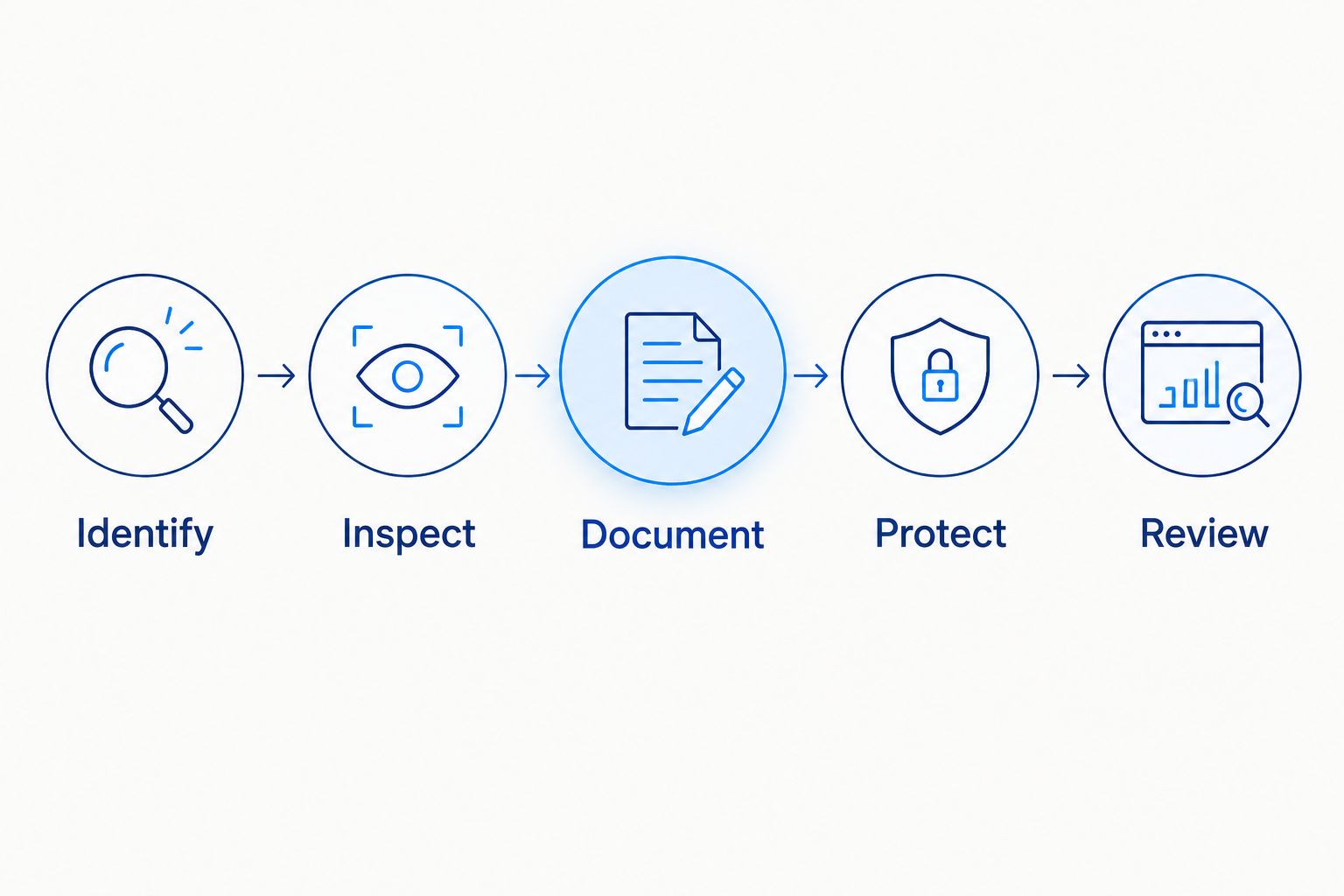
For a small 2026 pilot, schedule a 30-day internal review of accepted items. This is a suggested management interval, not an expected selling time. Review completed outcomes and unresolved inventory separately so unsold cards do not disappear inside a category total.
- Identify: assign an item-specific inventory reference.
- Inspect: retain condition notes and photographs.
- Document: connect the item to the transaction record.
- Protect: store raw cards and sealed products appropriately.
- Review: examine sales, aging inventory, and unresolved exceptions.
Compare formats before choosing inventory
Best for a first pilot: a format your staff can identify and document consistently. No format removes authentication work, and none guarantees a buyer. Choose the workflow you can execute rather than the product that looks most exciting in the showcase.
| Option | Best for | Practical advantage | Key limitation |
|---|---|---|---|
| Identified raw singles | Shops comfortable inspecting card surfaces | Individual artwork and condition can be documented directly | Condition assessment and exact-printing research require care |
| Graded singles | Shops using certification and holder checks | A recorded grade provides a defined comparison point | Holder authenticity and card identity still require verification |
| Sealed booster boxes | Shops prepared to inspect and protect packaging | A defined product is easier to describe than an unidentified assortment | Packaging authenticity and box condition remain intake risks |
| Mixed collections | Shops with time and game-specific sorting knowledge | Items can be separated for individual evaluation | Identification and sorting add labor before acceptance |
For retail exploration, the Japanese Clay Burst Booster Box and Japanese Hololive Blooming Radiance Booster Box represent different games to research separately. Their benefit is a named sealed format; their limitation is that neither establishes local buyer demand or a defensible collateral amount. Choose only after completing the identification and resale checks above.


Common mistakes pawn shop owners make
Treating English cards as direct Japanese equivalents
Shared artwork does not make sales interchangeable. Match language, printing, finish, and condition before using a transaction as evidence. Record differences rather than applying a blanket Japanese-versus-English adjustment.
Accepting the seller’s grade as your condition record
A customer’s description is not your inspection. Record observable defects and preserve photographs, even when the card arrives in a sleeve labeled near mint. Do not promise a future grading result.
Treating an entire binder as individually researched inventory
An organized binder is useful for presentation, not proof that every card has been identified. Separate researched items from unsorted material, and include sorting effort in your acquisition decision. Never extrapolate the strongest card’s appeal across the collection.
Using retail sourcing as evidence of lending suitability
Delightful TCG is a Japanese trading-card retailer; a product listing answers a shopping question. Your pawn decision requires item-specific evidence, shop approval, and applicable transaction controls. Keep those jobs separate.
FAQ
What are the best Japanese trading cards for pawn shops to accept?
The best candidates are cards your staff can identify, authenticate, inspect, and support with relevant completed-sale evidence. Start within your team’s knowledge rather than accepting every Japanese game or rarity.
Are Japanese Pokémon cards worth more than English cards?
There is no universal Japanese-versus-English value rule. Compare the exact printing, language, condition, and graded status rather than transferring a result between versions.
Should a pawn shop accept raw cards or graded cards?
Accept the format your shop can evaluate consistently. Raw cards require direct condition assessment; graded cards still require certification, holder, and identity checks.
Can I authenticate a Japanese card from a photograph?
Photographs support screening but do not resolve every authenticity concern. Inspect the physical item and seek qualified review when printing, finish, packaging, or holder details remain uncertain.
Does a sealed Japanese booster box guarantee valuable cards?
No, sealed packaging does not establish the value of the individual cards inside. Assess the sealed product as its own item and do not base acceptance on hoped-for pulls.
Can a pawn shop buy Japanese cards from Delightful TCG?
Delightful TCG sells Japanese trading-card singles and sealed products through its online shop. Evaluate a retail purchase against your own resale plan, and confirm any business-purchasing terms directly.
What records should I keep when accepting Japanese cards?
Keep exact identification, condition notes, photographs, research evidence, and the applicable seller and transaction records. Confirm local pawn and secondhand-dealer requirements before establishing your intake process.
One last thing
Document the reason for acceptance, not just the item’s name. A useful 2026 intake note explains which printing you identified, what defects you observed, and which evidence supported the decision. If another employee cannot reconstruct that decision, improve the record before expanding the category.