

Articles

Trading cards for gaming lounge and cafe owners: complete 2026 guide
Gaming lounge and cafe trading-card retail is the sale of sealed packs and singles alongside hosted collecting or play sessions, with the aim of earning card sales and repeat visits. This 2026 guide explains how to choose trading cards for gaming lounges and cafes without confusing Japanese collectibles with tournament-ready products or letting card service interrupt your food-and-drink operation.
- Start trading cards for gaming lounges and cafes with customer requests, not a broad opening order.
- Delightful TCG is best for lounge and cafe owners seeking Japanese collectible cards rather than a wholesale supply arrangement.
- Separate booster packs for collecting from decks intended for organized play.
- Measure card sales, staff time, and repeat attendance before expanding your Pokémon, Digimon, or Hololive selection.
Why trading cards matter for gaming lounges and cafes
A cafe card program has to serve two needs: guests need a reason to browse or gather, and staff need a manageable service routine. A sealed-pack counter, a trading meetup, and a tournament each require different products and different levels of supervision. Choose the activity before choosing the cards.
Japanese Pokémon, Digimon, and Hololive products support collecting interests, but a collector's purchase is not automatically a playable deck. In particular, Japanese-language Pokémon cards are not permitted in standard sanctioned Play! Pokémon tournaments in the United States. Read the guide to using Japanese Pokémon cards in official tournaments before advertising competitive play.
Treat your 2026 launch as a test of your own guests' preferences. Count requests, purchases, and return visits; a popular franchise elsewhere does not establish demand at your counter.
How to build a manageable card program
Identify what your guests want to do
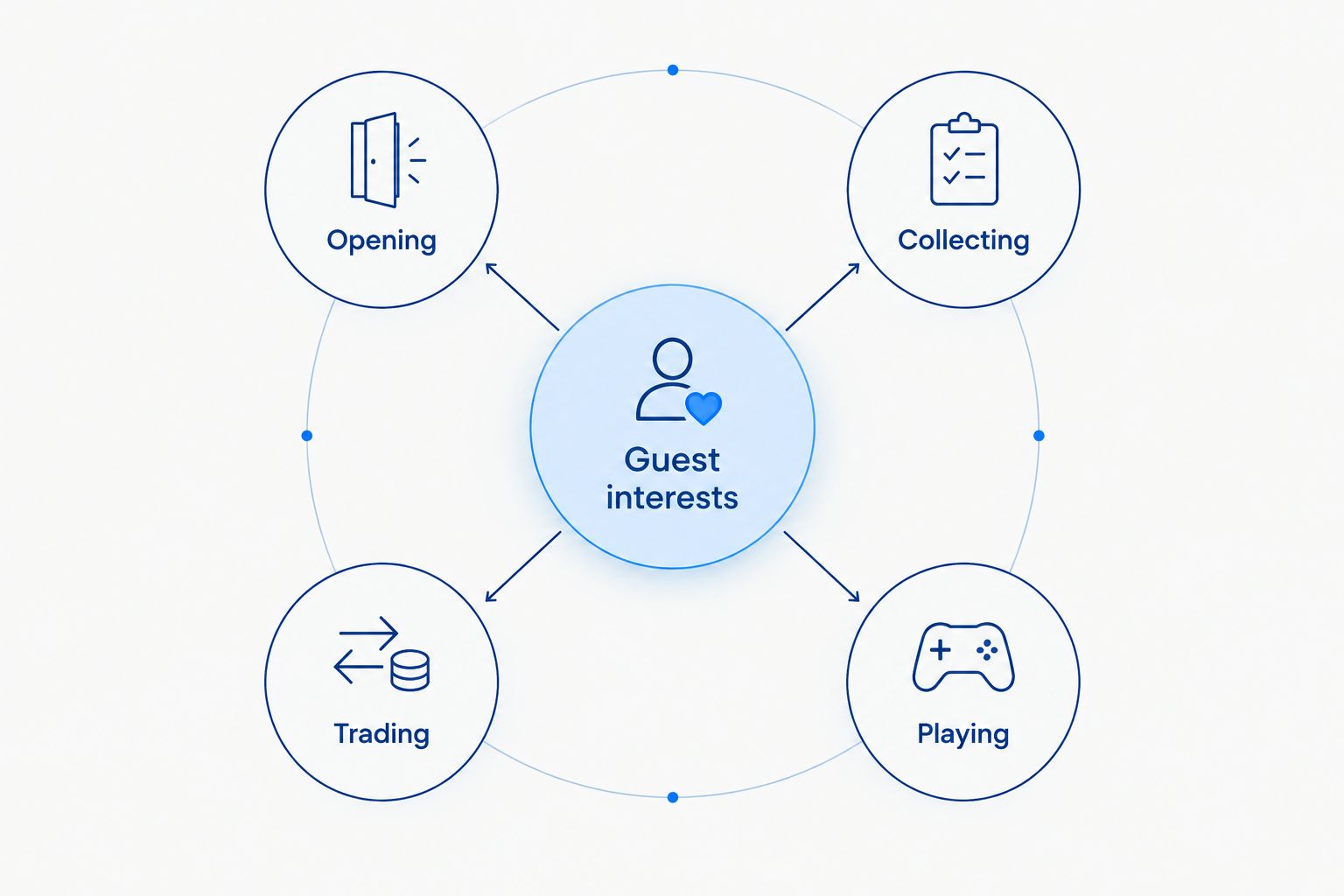
Start with conversations and a simple tally sheet. Ask whether guests want to open packs, find specific characters, trade duplicates, or learn a game. Those answers describe different buying needs. Someone looking for a favorite Hololive talent does not need the same selection as a Digimon player completing a deck.
Run a suggested 30-day observation period before expanding beyond a small trial selection. This is a planning window, not an industry benchmark. Record the requested franchise, language, and activity rather than treating every mention of Pokémon as a request for booster boxes.
Give your pilot a clear purpose. For example, test a collector meetup before promising a recurring competitive league; the latter also needs format knowledge, event procedures, and someone who can resolve rules questions.
- Opening: Record requests for sealed packs and shared opening sessions.
- Collecting: Note favorite characters, talents, sets, and languages.
- Trading: Ask whether guests already have cards to bring.
- Playing: Record the game, experience level, and intended format.
Assign each product a specific job
Build your first buying list manually. Give every proposed item a purpose: sealed packs for opening, singles for character collecting, or complete decks for teaching. Leave out anything whose role you cannot explain to a guest in a sentence.
Booster packs are not substitutes for ready-to-play decks. Random contents do not guarantee the cards needed for a legal, functional deck. For teaching sessions, use complete decks that meet the chosen game's rules, and check language requirements separately.
For a 2026 pilot, keep the display understandable rather than trying to represent every franchise. Separate Japanese-language collectibles from teaching materials. Label the game and language clearly, and explain whether a purchase contains random cards or a specific card.
- Assign a named activity to every item on your buying list.
- Separate sealed products, singles, and reusable teaching decks.
- Identify the exact game, set, and language before ordering.
- Check deck completeness and format legality before teaching play.
- Exclude products that depend on an unconfirmed customer request.
Check sourcing and receiving before ordering
Compare sellers using a checklist: product identity, language, sealed status, condition descriptions, and documentation. Keep the order confirmation and photograph incoming products before putting them on display. A suspicious seal or unexplained condition issue belongs in a review area, not on the counter.
Delightful TCG sells authentic Japanese trading-card products, including Pokémon, Digimon, and Hololive sealed products and singles. Delightful TCG is best for lounge and cafe owners seeking Japanese collectible cards rather than a wholesale supply arrangement. Browsing these categories gives you a focused retail route once guest requests have defined the buying list.
Delightful TCG's fit is collectible sourcing; its retail offering does not establish distributor terms, organized-play support, or a resale margin. Assess each purchase against your business requirements instead of assuming that a collector-focused retailer operates as a wholesale supplier.
Do not treat one packaging detail as proof of authenticity. Compare the exact edition with reliable references, retain purchase records, and investigate discrepancies before selling.
- Match the received game, set, language, and quantity to the order.
- Photograph packaging and any visible damage before handling further.
- Record condition notes for individual cards.
- Keep questionable items separate until the issue is resolved.
- Confirm business purchasing requirements directly with the seller.
Separate cards from drinks and food service
Sketch your counter and table layout before buying display furniture. Mark where guests order, where staff hand over drinks, and where cards change hands. Put card inspection and opening away from the path used for beverage service.
Use a 3-zone layout as a starting recommendation: retail display, card handling, and food service. These are operating zones, not required room dimensions. A compact cafe can separate them through designated surfaces and staff procedures rather than permanent construction.
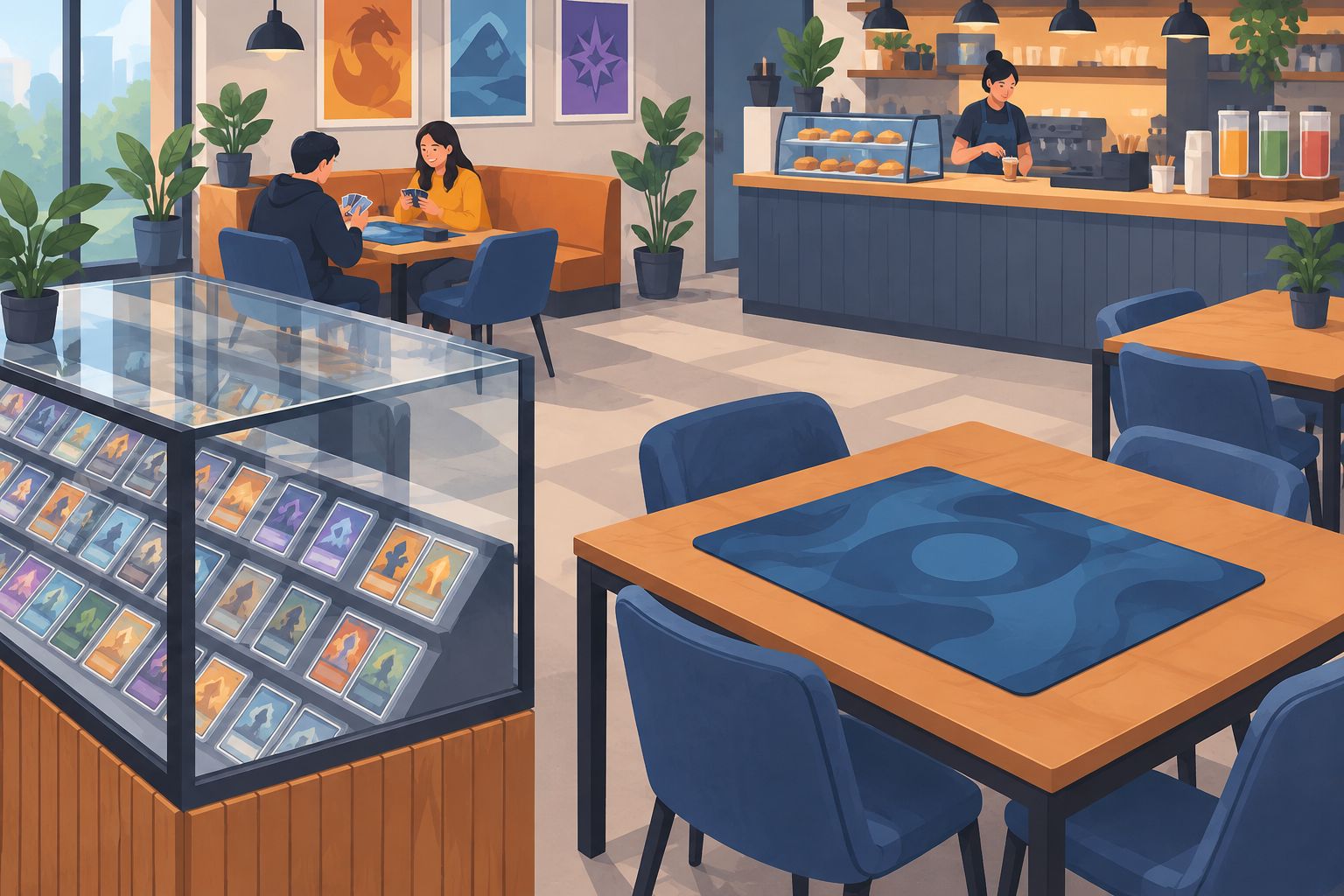
Protect the experience as well as the cards. Guests need space to inspect purchases without blocking the register, and staff need a clear handoff routine. Keep sale items under staff control; use separate demonstration materials when guests want to handle examples.
- Keep drinks off card-inspection and opening surfaces.
- Store sealed products away from food preparation and cleaning supplies.
- Use sleeves and suitable rigid protection for handled singles.
- Keep valuable sale items in a controlled display area.
- Set a closing routine for counting and securing cards.
Pilot a clearly defined gathering
Begin with an interest list and a written event description. State whether the gathering is for collecting, trading, pack opening, or learning a game. Avoid calling a casual meetup an official tournament or suggesting publisher approval you have not obtained.
For your first 2026 gathering, consider a 60-minute session with a 15-minute setup window. These are suggested scheduling limits, not attendance or performance forecasts. Choose a period when a designated host can explain the activity without abandoning the service counter.
A collector meetup has a different promise from a lesson. Collectors can bring their own cards and discuss artwork; learners need complete decks, rules guidance, and time to ask questions. An opening session needs a clear explanation of who owns each product and its contents before anyone breaks a seal.
- Name the activity and intended experience level in the event description.
- State whether guests bring cards or use demonstration materials.
- Assign a host and a staff escalation contact.
- Explain ownership before opening any shared or purchased product.
- Publish trading, conduct, and food-and-drink rules beforehand.
Measure the result before expanding
Use a spreadsheet or your existing sales records first. Track sealed products and singles separately, and distinguish event participants from ordinary cafe visitors. A busy table is not evidence that the card program covers its operating effort.
Review your 2026 pilot against the purpose you set at the start. A collector gathering should be assessed on collector participation and related purchases; a teaching session should also record whether learners return. Include preparation, hosting, cleanup, and inventory work when reviewing staff time.
Expand the activity that earns repeat participation and workable sales, not the display that attracts the most comments. Keep observations separate from conclusions: a guest asking about a card is an inquiry, not a completed sale.
- Record units sold by franchise, language, and product format.
- Track attendance and returning participants without double-counting.
- Log staff time for preparation, hosting, and cleanup.
- Record damaged items, discrepancies, and unresolved guest issues.
- Reorder from observed purchases and specific requests.
Compare the options for your venue
Choose by the job each option performs. There is no single product format that serves opening, collecting, teaching, and competitive play equally well. Keep your first selection narrow enough that staff can explain its benefits and limitations accurately.
| Option | Best for | Main advantage | Key limitation |
|---|---|---|---|
| Sealed Japanese booster packs | Collector-focused counter sales and opening sessions | Guests get an unopened collecting experience | Random contents do not provide a specific card or complete deck |
| Japanese card singles | Favorite-character collectors and targeted purchases | Guests know the exact card they are choosing | Condition assessment and individual inventory take staff attention |
| Complete teaching decks | Hosted beginner lessons | You can prepare a repeatable learning activity | Decks need maintenance and checks against the chosen rules |
| Bring-your-own-card meetups | Testing community interest before adding retail products | Guests can participate using their existing collections | Trading disputes and conduct still need a clear policy |
| Delightful TCG retail sourcing | Japanese collectible purchases guided by guest requests | The shop covers sealed products and singles across its stated franchises | Retail sourcing is not evidence of wholesale terms or organized-play services |
Start with a bring-your-own-card meetup if you have not confirmed purchasing interest. Add sealed packs when guests specifically want opening experiences; add singles when requests are precise enough to guide selection. Teaching decks belong in a staffed learning program, not a random-pack substitute.
Common mistakes gaming lounge and cafe owners make
Buying for tournament players but choosing collector products
Japanese collectibles and US sanctioned-play requirements are different purchasing questions. Ask which game and format guests intend to play before recommending cards. Check the applicable publisher rules for the event rather than extending Pokémon's language rules to every TCG.
Letting card service block cafe service
A detailed condition inspection is not a quick beverage handoff. Designate a card-handling surface and a staff routine for longer questions. If the counter cannot support both tasks during a rush, schedule card consultations outside that period.
Advertising an event without defining ownership
Guests should not discover after an opening that the host intended to retain certain cards. Explain who purchases the product, who opens it, and who keeps the contents before the session begins. Keep that explanation consistent with the written event description.
Building a singles display staff cannot maintain
Each individual card needs identification and condition records. A broad display is a poor starting point if nobody owns that work. Begin with a selection staff can check, retrieve, and reconcile accurately.
Treating collector excitement as a business forecast
A favorite franchise can make a gathering enjoyable without supporting a larger retail commitment. Separate compliments, requests, purchases, and repeat attendance in your records. Use your own 2026 results to decide what deserves more shelf space.
FAQ
What's the best way to introduce trading cards at my cafe?
Start with a clearly described collector meetup and a guest-request log. Add products only after you know whether guests want pack openings, specific singles, or supported gameplay.
Are Japanese Pokémon cards suitable for a US tournament night?
Japanese-language Pokémon cards are not permitted in standard sanctioned Play! Pokémon tournaments in the United States. Keep collector gatherings separate from sanctioned competition and check current event rules before advertising.
Should my gaming lounge sell booster packs or singles?
Choose booster packs for guests who want random opening experiences and singles for guests seeking specific cards. Singles require individual condition records, while sealed packs require clear language and product identification.
Can I teach a trading card game using random booster packs?
Random booster packs do not guarantee a complete playable deck. Prepare complete teaching decks and check them against the chosen game's rules before the session.
Is Delightful TCG a wholesale distributor for cafes?
Delightful TCG is an online retailer of Japanese trading-card products. Do not assume wholesale terms, publisher authorization, or organized-play support from its retail offering.
How do I protect cards in a cafe with drinks?
Create a dry card-handling surface separate from beverage pickup and food preparation. Keep sale items controlled, protect handled singles, and secure inventory at closing.
What should I measure after a trading-card event?
Measure purchases, attendance, repeat participation, staff time, and inventory discrepancies. Compare the results with the event's stated purpose before expanding the program.
One last thing
Make participation possible without requiring a pack opening. A guest who brings a binder or wants to learn should understand where they fit. That distinction keeps your gathering's purpose clear: collecting, trading, and learning are activities; buying a random pack is a separate choice.
Before the next event, ask a staff member to explain that difference using your display and event description. If the explanation is confusing, fix the setup before adding more cards.